Documentary short film about the afterlife of the remnants of the Berlin Wall.
Social & External
A day in the city of Berlin, which experienced an industrial boom in the 1920s, and still provides an insight into the living and working conditions at that time. Germany had just recovered a little from the worst consequences of the First World War, the great economic crisis was still a few years away and Hitler was not yet an issue at the time.
Bosom buddies BeV StroganoV, Ovo Maltine, Ichgola Androgyn and Tima die Göttliche are four Berlin drag queens who met in the mid 1980s. These four queens became Germany’s most popular drag performers and have been busy fertilizing the German cultural scene. Besides being performers, they are also political activists – in AIDS awareness, anti-gay violence, the sex workers movement and the struggle against the extreme right and racism. The film tells their story.
Journey with the musicians of the Berlin Philharmonic and their conductor Sir Simon Rattle on a breakneck concert tour of six metropolises across Asia: Beijing, Seoul, Shanghai, Hong Kong, Taipei and Tokyo. Their artistic triumph onstage belies a dynamic and dramatic life backstage. The orchestra is a closed society that observes its own laws and traditions, and in the words of one of its musicians is, “an island, a democratic microcosm – almost without precedent in the music world - whose social structure and cohesion is not only founded on a common love for music but also informed by competition, compulsion and the pressure to perform to a high pitch of excellence... .” Never before has the Berlin Philharmonic allowed such intimate and exclusive access into its private world.
The incredible story of Bruno Lüdke (1908-44), the alleged worst mass murderer in German criminal history; or actually, a story of forged files and fake news that takes place during the darkest years of the Third Reich, when the principles of criminal justice, subjected to the yoke of a totalitarian system that is beginning to collapse, mean absolutely nothing.
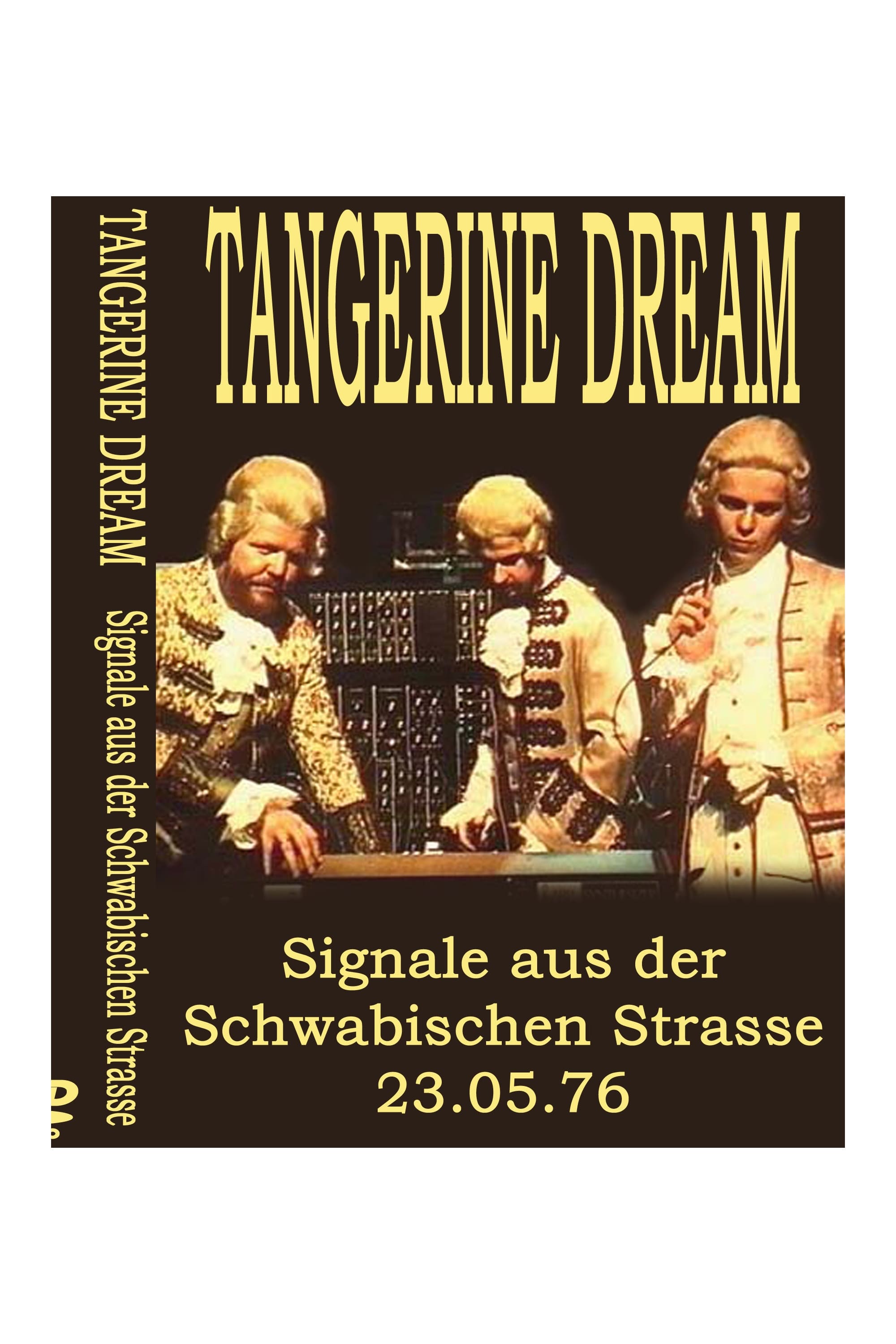
German TV film, also shown on Spanish TV in 1976, this is a film all about TD which includes informal interviews and concert/studio footage, most of which seems to have been done exclusively for the film. The interviews are in the German language. The street name in the title refers to where Edgar Froese used to live in Berlin (apparently Klaus Schulze lived on the same street at the time) and is now the site of the TDI offices.
Documentary examines the history and evolution of the Olympic Games, taking a close look at the Olympic charter, oath and ideals. Also featured are rare home movies and interviews with Olympic athletes and the oldest known color footage of the Olympic Games from Berlin in 1936.
In 1988, Tilda Swinton toured round the Berlin Wall on a bicycle - starting and ending at the Brandenburg Gate - accompanied by filmmaker Cynthia Beatt. As Swinton travels through fields and historic neighborhoods, past lakes and massive concrete apartment buildings, the Wall is a constant presence.
Ahead of releasing 'Idols', his most personal album to date, and before anyone had heard a note, Yungblud and his touring family travelled to Berlin, where he would perform and record these brand new songs live for the very first time. A personal journey of change, confidence and rock-and-roll chaos, set against a city that has always celebrated counterculture and creativity, this is a revealing and uncompromising documentary about a generational artist finding his own voice.
Former "Titanic" satire magazine editor Martin Sonneborn takes an undercover trip around Berlin and discovers the East-German mentality and what is left of the socialist German Democratic Republic.
A documentary about the deconstruction of the Berlin Wall which makes no use of vocal commentary but instead focuses on visual elements. From the Potsdamer Platz to the Brandenburg Gate, the camera captures the historic events from all sides and different angles: on the one hand there are news reporters and tourists from all over the world taking pictures, children selling pieces of the wall to passers-by, and people celebrating New Year's Eve, on the other we see abandoned subway stations and officials with blank looks on their faces.
In today's climate debate, there is only one factor that cannot be calculated in climate models - humans. How can we nevertheless understand our role in the climate system and manage the crisis? Climate change is a complex global problem. Increasingly extreme weather events, rising sea levels, and more difficult living conditions - including for us humans - are already the order of the day. Global society has never faced such a complex challenge. For young people in particular, the frightening climate scenarios will be a reality in the future. For the global south, it is already today. To overcome this crisis, different perspectives are needed. "THE UNPREDICTABLE FACTOR" goes back to the origins of the German environmental movement, accompanies today's activists in the Rhineland in their fight against the coal industry and gives a voice to scientists from climate research, ethnology and psychology.
The film accompanies Jenny Gröllmann, a German actress, during the last two years of her life.
Fictional film with documentary elements about a jazz musician in Berlin.
“Liberty Train – Bürger’s Long Journey” sheds light on the events of the PEACEFUL REVOLUTION of 1989 from different perspectives. It centres on the eyewitnesses who, together with thousands of other people who had fled East Germany, were in the garden of the West German Embassy in Prague on the evening of the 30 September 1989.
This documentary shows how the Berliner workers lived in 1930. The director Slatan Dudow shows through images: a) the workers leaving the factory; b) the raise of the rents; c) the "unpleasant" guest, meaning the justice officer that brings the eviction notice; d) the fight of classes of the houses of capitalists and working classes; e) the parks of the working class; f) the houses of the working class, origin of the tuberculosis and the victims; g) the playground of the working class; h) the swimming pool for the working class, ironically called the "Baltic Sea" of the working class; i) the effects of humidity of basement where a family lives, with one member deaf; j) one working class family having dinner while the capitalist baths his dog; k) the eviction notice received from an unemployed family and their eviction.
Filmed in Berlin, July 1990. Images of workers taking down the wall and street peddlers selling pieces of it to make a living.
A portrait of Rosa von Praunheim's neighbor, who worked for decades as a professional dominatrix in Berlin's Wilmersdorf district. While the real Lady MacLaine reflects authentically and wittily on her life and work, her life is retold in dramatized scenes.
Short documentary about artist Keith Haring, detailing his involvement in the New York City graffiti subculture, his opening of the Pop Shop, and the social commentary present in his paintings and drawings.
The intricate history of UFA, a film production company founded in 1917 that has survived the Weimar Republic, the Nazi regime, the Adenauer era and the many and tumultuous events of contemporary Germany, and has always been the epicenter of the German film industry.
Dragan Wende has lived in Berlin since the '70s and has seen the city change through the years. His nephew comes to live with him as Dragan remembers the better days he lived as a Yugoslavian immigrant in a divided city.
Colonel Stok, a Soviet intelligence officer responsible for security at the Berlin Wall, appears to want to defect but the evidence is contradictory. Stok wants the British to handle his defection and asks for one of their agents, Harry Palmer, to smuggle him out of East Germany.
A compilation of over 30 years of private home movie footage shot by Lithuanian-American avant-garde director Jonas Mekas, assembled by Mekas "purely by chance", without concern for chronological order.
A British woman on a visit to post-war Berlin is caught up in an espionage ring smuggling secrets into and out of the Eastern Bloc.
An inside look at one of the most anticipated movie sequels ever with James Cameron and cast.
Daniel Craig candidly reflects on his 15 year adventure as James Bond. Including never-before-seen archival footage from Casino Royale to the upcoming 25th film No Time To Die, Craig shares his personal memories in conversation with 007 producers, Michael G Wilson and Barbara Broccoli.
Those who knew iconic funnyman John Candy best share his story, in their own words, through never-before-seen archival footage, imagery, and interviews.
Al Pacino's deeply-felt rumination on Shakespeare's significance and relevance to the modern world through interviews and an in-depth analysis of "Richard III."
The wild West Berlin of the 1980s became the creative melting pot of pop subcultures: music, art and chaos. Before the Iron Curtain fell, anything and everything seemed possible.
Lyrical and powerfully personal essay film that reflects on the deaths of her husband Lou Reed, her mother, her beloved dog, and such diverse subjects as family memories, surveillance, and Buddhist teachings.
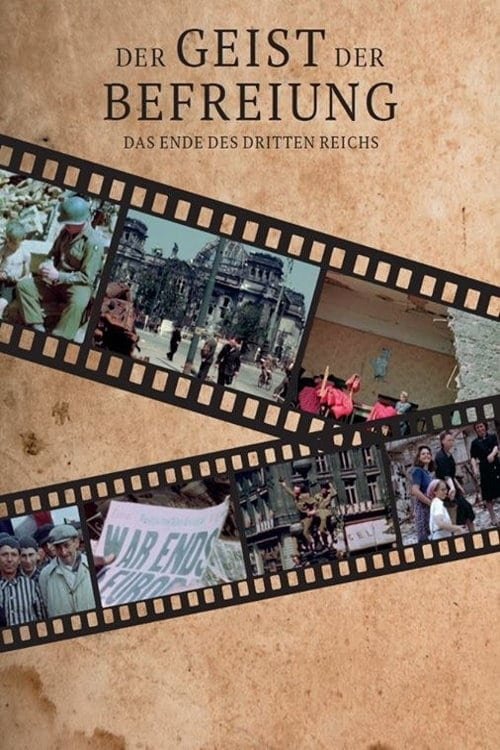
When Allied forces liberated the Nazi concentration camps in 1944-45, their terrible discoveries were recorded by army and newsreel cameramen, revealing for the first time the full horror of what had happened. Making use of British, Soviet and American footage, the Ministry of Information’s Sidney Bernstein (later founder of Granada Television) aimed to create a documentary that would provide lasting, undeniable evidence of the Nazis’ unspeakable crimes. He commissioned a wealth of British talent, including editor Stewart McAllister, writer and future cabinet minister Richard Crossman – and, as treatment advisor, his friend Alfred Hitchcock. Yet, despite initial support from the British and US Governments, the film was shelved, and only now, 70 years on, has it been restored and completed by Imperial War Museums under its original title "German Concentration Camps Factual Survey".
20 years after Calvin and Hobbes stopped appearing in daily newspapers, filmmaker Joel Allen Schroeder has set out to explore the reasons behind the comic strip's loyal and devoted following.
A visual montage portrait of our contemporary world dominated by globalized technology and violence.
Through deeply personal interviews with her siblings and an examination of the photographs, letters, and belongings left behind, Mariska assembles a new portrait of her mother Jayne Mansfield, an extraordinary and complex woman.
Using the book 'Fragments', which collects Marilyn Monroe's poems, notes and letters, and with participation from the Arthur Miller and Truman Capote estates who have contributed more material, each of the actresses will embody the legend at various stages in her life.
Martin Scorsese, Robert De Niro, Joe Pesci, and Al Pacino in conversation about The Irishman.
Documentary filmmaker Amy Berg investigates the life of 30-year pedophile Father Oliver O'Grady and exposes the corruption inside the Catholic Church that allowed him to abuse countless children. Victims' stories and a disturbing interview with O'Grady offer a view into the troubled mind of the spiritual leader who moved from parish to parish gaining trust ... all the while betraying so many.
When a mysterious caller plants a bomb under his car seat, a bank executive begins a high-speed chase across the city to complete a specific series of tasks — all with his kids trapped in the back seat.
Frank left his life as a soldier behind and wants to rebuild his life in Brandenburg. He is on his way to meet his daughter, Lily, after a long time of not seeing her. As he stops at a gas station he meets Andreas, who needs a ride to Berlin. Reluctantly, Frank agrees to take Andreas with him - unaware of the consequences.
A documentary on the expletive's origin, why it offends some people so deeply, and what can be gained from its use.