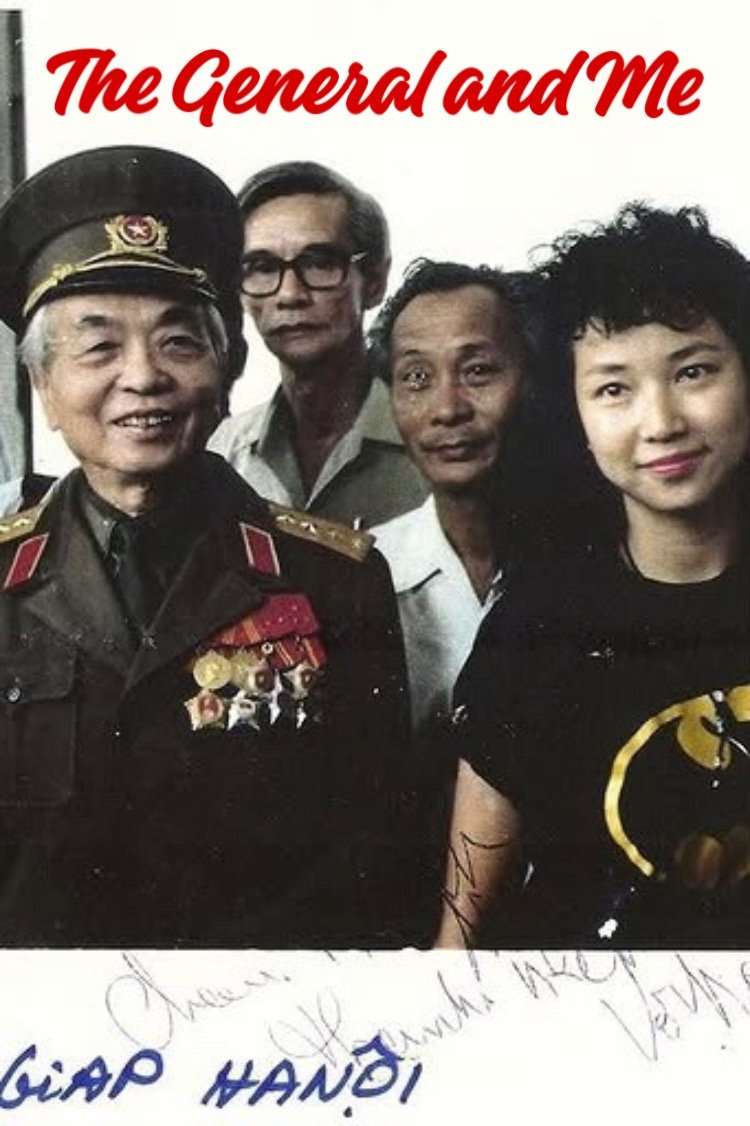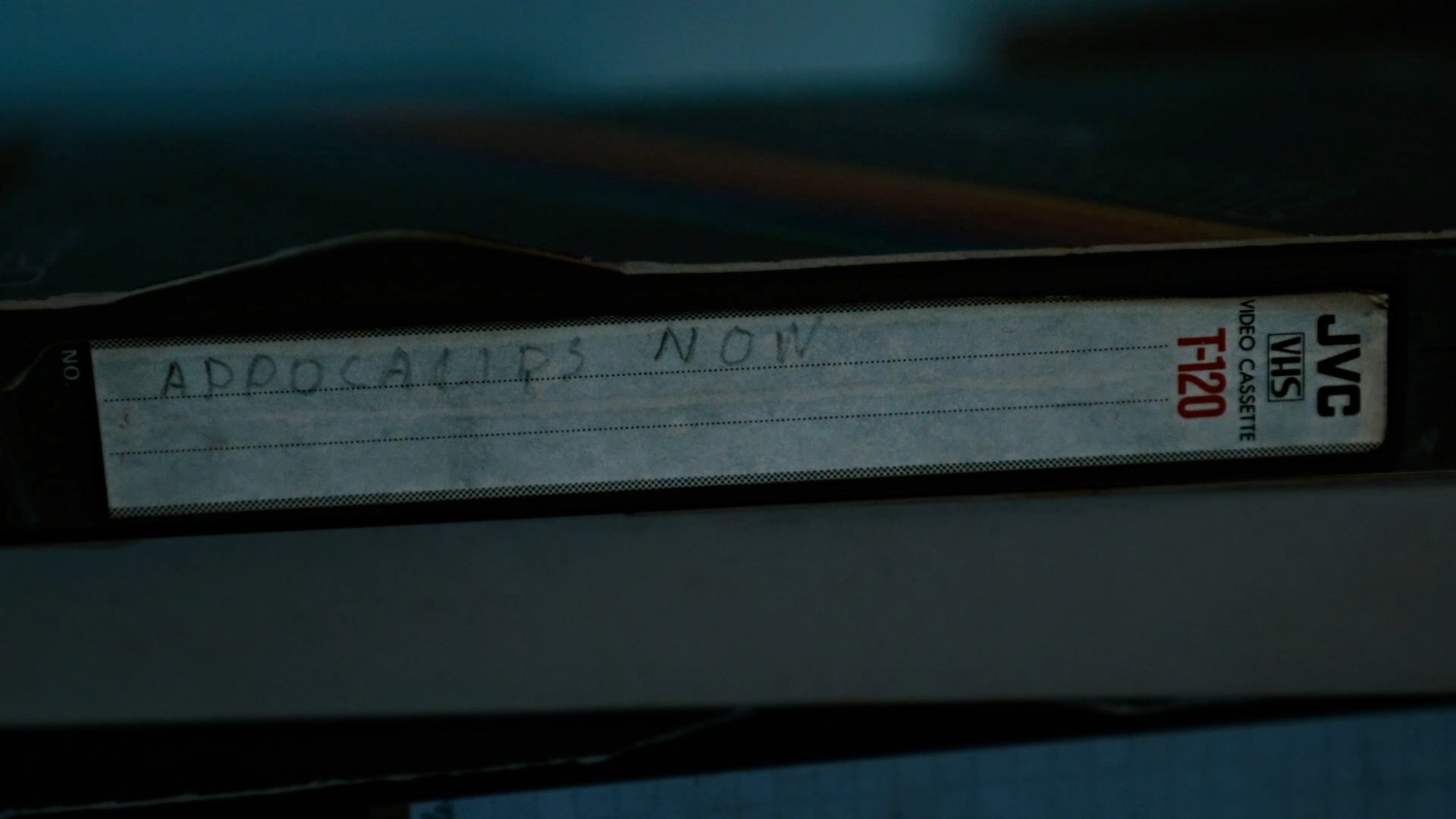
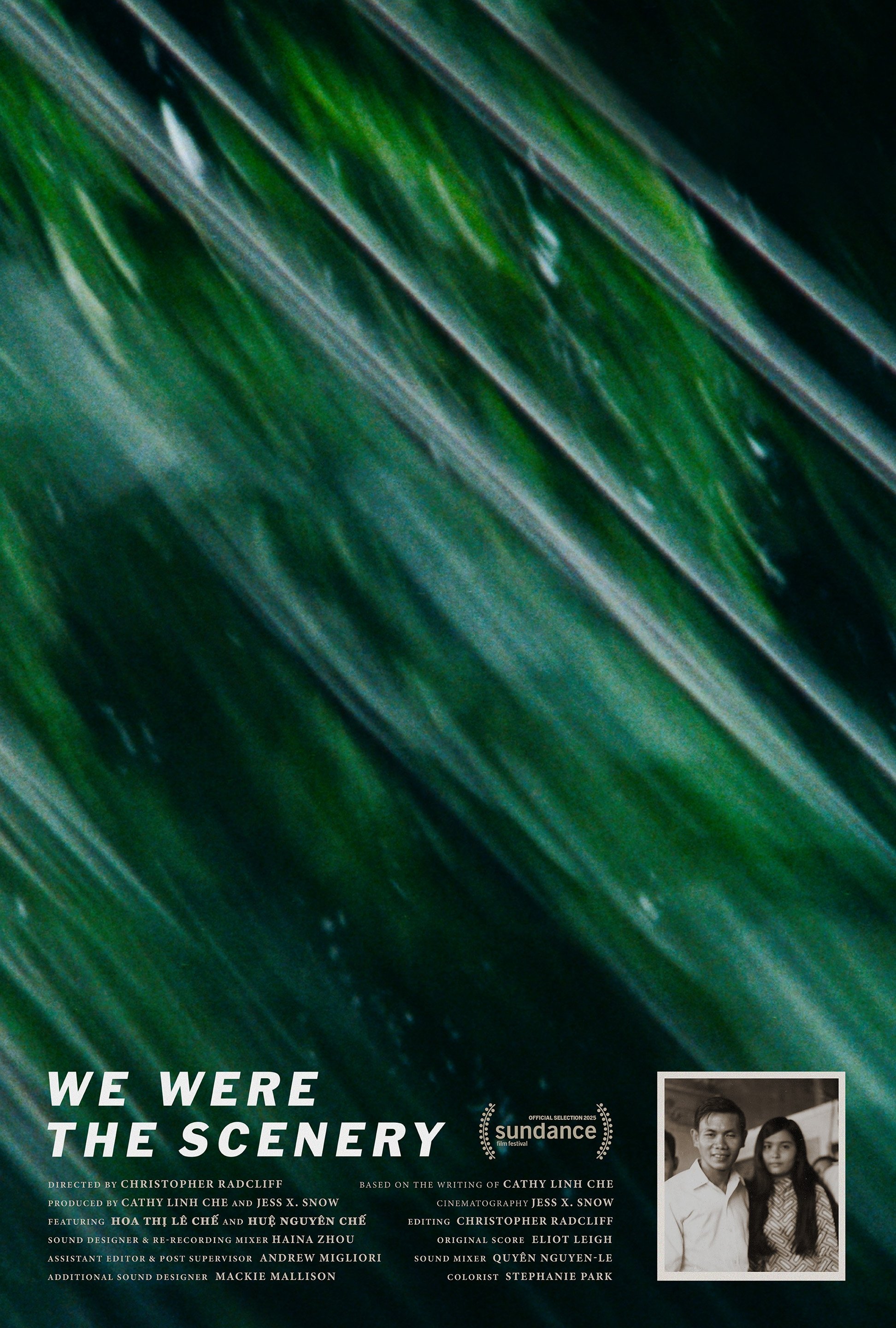
In 1975, soon after the end of the Vietnam War, Hoa Thi Le and Hue Nguyen Che fled the country on a small boat. After nine days at sea, they docked in the Philippines, where they were utilized as background extras for “Apocalypse Now.”
Social & External
Self
Growing up in Masbate Province in the Philippines, Jary is neglected and shunned since the moment of his birth for one reason-- his appearance. His older sister, Jessa protects Jary through his early years, then takes him in as a young teen, to raise him alongside her own two children in a fragile house on a hill. Jessa seeks out the medical care Jary has been denied since birth. And more, the support to begin his physical and emotional recovery. Every Day After is a 35-minute documentary film that provides a more nuanced look at the complexities of the healing process we don’t often see. And honors the invisible labor of a sister whose love and action make it possible for Jary to experience the everyday joys and struggles of growing up.
On a misty morning in the fall of 1985, a small group of Haida people blockaded a muddy dirt road on Lyell Island, demanding the government work with Indigenous people to find a way to protect the land and the future. In a riveting new feature documentary drawn from more than a hundred hours of archival footage and audio, award-winning director Christopher Auchter (Now Is the Time) recreates the critical moment when the Haida Nation’s resolute act of vision and conscience changed the world.

A disorienting realm where reality itself flickers and fragments. Through a visceral exploration of digital distortion and failing verification processes, this challenges your perception and dares you to question what lies beneath the surface. Are we truly awake to the genocides and wars raging beyond our privileged bubbles, or are we content to remain ensnared by manipulated realities? This is a personal call to shatter the illusions, to seek deeper truths, and to recognize the profound fortune of our existence amidst global turmoil.
How does a nation slip into war? Dateline-Saigon profiles the controversial reporting of five Pulitzer Prize-winning journalists -The New York Times' David Halberstam, the Associated Press' Malcolm Browne, Peter Arnett, and legendary photojournalist Horst Faas, and UPI's Neil Sheehan -- during the early years of the Vietnam War as President John F. Kennedy is secretly committing US troops to what is initially dismissed by some as 'a nice little war in a land of tigers and elephants.' 'When the government is telling the truth, reporters become a relatively unimportant conduit to what is happening,' Halberstam tells us. 'But when the government doesn't tell the truth, begins to twist the truth, hide the truth, then the journalist becomes involuntarily infinitely more important.'
A French documentary or, one might say more accurately, a mockumentary, by director William Karel which originally aired on Arte in 2002 with the title Opération Lune. The basic premise for the film is the theory that the television footage from the Apollo 11 Moon landing was faked and actually recorded in a studio by the CIA with help from director Stanley Kubrick.

Documentary short following French-Vietnamese artist Marcelino Truong on his journey back to Vietnam for the research on his 'roman graphique' 'Une si jolie petite guerre' (A Lovely Little War). Truong looks back to when his family lived in Saigon from 1961 to 1963 when his father served as a translator to then president of the Republic of Vietnam Ngo Dinh Diem. The film follows Truong as he ruminates over memories, photos and films, and also conducts a host of interviews with Vietnamese relatives and officials to present a personal and long awaited Vietnamese perspective to the war.
Bejeweled Fishes captures the spectacular beauty of the myriad fishes inhabiting coral reefs of the Tropical and Eastern Pacific. This Wild Window was captured in the Maldives Islands, Fiji, the Philippines, Mexico, California, and Indonesia.
Co-curated by Jenni Olson and the late Black gay activist Karl Knapper, this entertaining showcase of vintage movie trailers traces the evolution of African American cinema through its most crucial period, 1952-1976. Filled with insights on race and social dynamics, this fascinating compendium of coming attractions explores an extensive range of stylistic approaches—Blaxploitation, Comedy, Music Bio, Plantation Drama and more—offering an outrageous joyride through motion picture history. Beyond mere camp, these marvelously condensed gems crystallize a range of African American identities and personalities, tracking the meteoric careers of Sidney Poitier, James Earl Jones, Billy Dee Williams, Richard Pryor, Pam Grier and others through their bold performances in movies both hugely popular and practically forgotten. Afro Promo provides a compact glimpse at the representation of African Americans through twenty-five dynamic years of American cinema history.
This special 10th anniversary edition of the Found Footage Festival finds curators Joe Pickett and Nick Prueher in a nostalgic mood, delving deeper--perhaps too deep--into some of their favorite VHS finds from over years. But Volume 7 is also jam packed with newly unearthed treasures, featuring singing rabbis, petulant news anchors, coughing snake handlers, bodybuilding clowns, and two body parts never before seen in the festival! It's a celebration of a decade of Found. Record over and you'll die! Taped live at The Grey Eagle in Asheville, North Carolina.
In 2045, a filmmaker lands on Mars and tries to make a film. “Home… Far away from home”, he recalls faces of people, thus a collection of moving images emerge.
A German Documentary about the “village of friendship” that was created by American Veteran George Mizo to help the Vietnamese kids suffering from the Vietnam War.
A chronicle of the production problems — including bad weather, actors' health, war near the filming locations, and more — which plagued the filming of Apocalypse Now, increasing costs and nearly destroying the life and career of Francis Ford Coppola.
The Tet Offensive during the Vietnam War, the Civil Rights Movement, the May events in France, the assassinations of Martin Luther King and Robert F. Kennedy, the Prague Spring, the Chicago riots, the Mexico Summer Olympics, the presidential election of Richard Nixon, the Apollo 8 space mission, the hippies and the Yippies, Bullitt and the living dead. Once upon a time the year 1968.
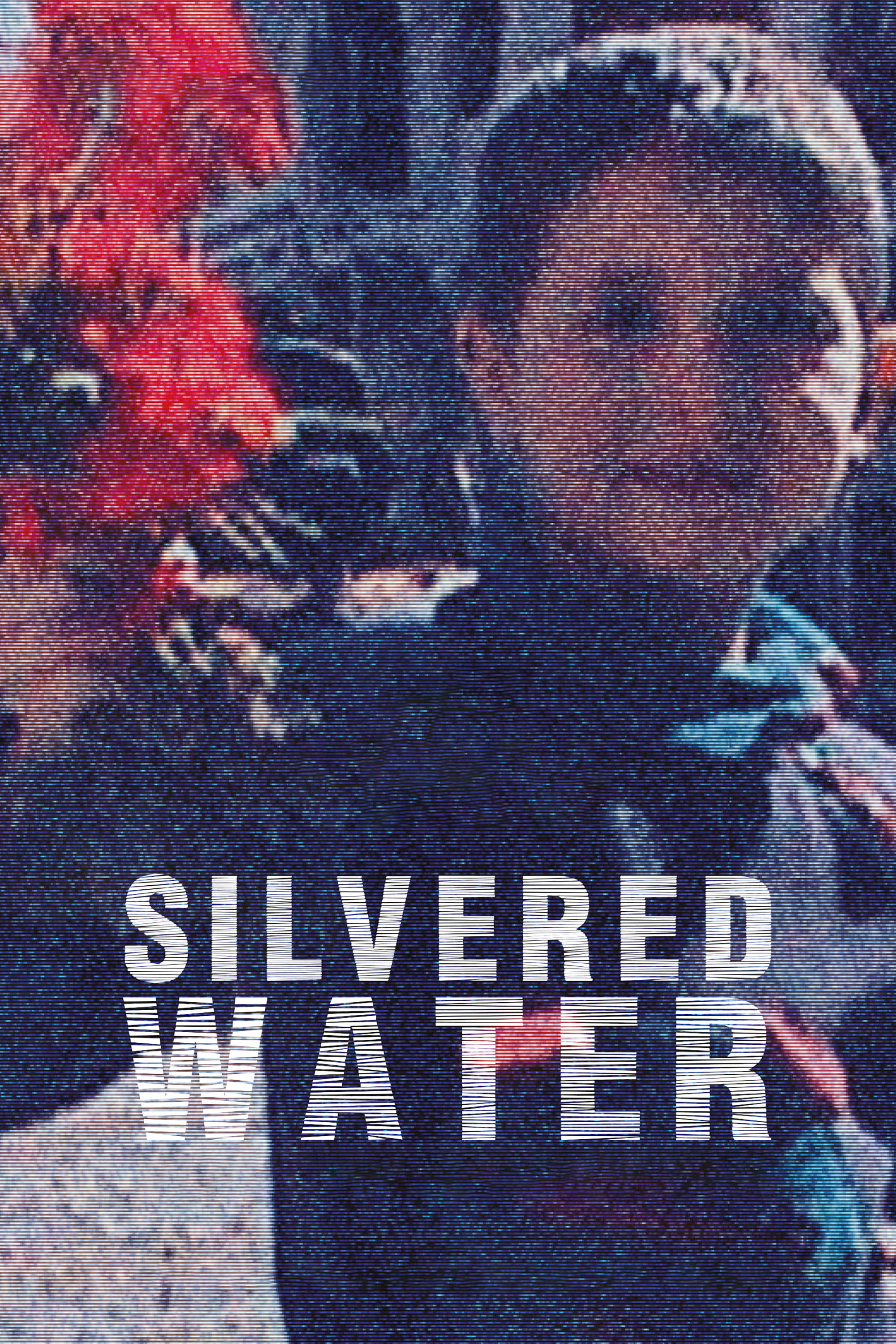
Shot by a reported “1,001 Syrians” according to the filmmakers, SILVERED WATER, SYRIA SELF-PORTRAIT impressionistically documents the destruction and atrocities of the civil war through a combination of eye-witness accounts shot on mobile phones and posted to the internet, and footage shot by Bedirxan during the siege of Homs. Bedirxan, an elementary school teacher in Homs, had contacted Mohammed online to ask him what he would film, if he was there. Mohammed, working in forced exile in Paris, is tormented by feelings of cowardice as he witnesses the horrors from afar, and the self-reflexive film also chronicles how he is haunted in his dreams by a Syrian boy once shot to death for snatching his camera on the street.
Right in the heart of the South China Sea, the Philippines find themselves on the front line of the conflict between Beijing and Washington. As tension mounts between the two countries, we take an in-depth look at the situation in the archipelago.
This documentary by Theo Kamecke from 1970 gives an in-depth and profound look at the Apollo 11 mission to the moon. NASA footage is interspersed with reactions to the mission around the world as the film captures the intensity as well of the philosophical significance of the event. Won special award at Cannes.
Frat House is a documentary film exploring the darker side of fraternity life, largely filmed at Allentown, Pennsylvania's Muhlenberg College; the majority of the film was shot in the house of the Alpha Tau Omega fraternity.
Three decades after German-American pilot Dieter Dengler was shot down over Laos, he returns to the places where he was held prisoner during the early years of the Vietnam War. Accompanied by director Werner Herzog, Dengler describes in unusually candid detail his captivity, the friendships he made, and his daring escape. Not willing to stop there, Herzog even persuades his subject to re-enact certain tortures, with the help of some willing local villagers.
A U.S. Navy Commander Jeremiah Denton leading a plane sortie into North Vietnam was shot down and captured as a POW. For 8 years of his life, he was a prisoner at Hanoi Hilton where he and other POWs were tortured. In a press conference, being forced by the North Vietnamese to say he was being treated well he blinked out the letters TORTURE in Morse code.
An Army cameraman is embedded with a reconnaissance patrol and charts their mission across territory controlled by the North Vietnamese.
Acting Lieutenant Hornblower attempts to study for his promotion examination, but becomes distracted by the serious supply problems that face his crew.
A visual montage portrait of our contemporary world dominated by globalized technology and violence.
During the chaotic final weeks of the Vietnam War, the North Vietnamese Army closes in on Saigon as the panicked South Vietnamese people desperately attempt to escape. On the ground, American soldiers and diplomats confront a moral quandary: whether to obey White House orders to evacuate only U.S. citizens.
An American soldier who had been killed during the Vietnam War is revived 25 years later by the military as a semi-android, UniSols, a high-tech soldier of the future. After the failure of the initiative to erase all the soldier's memories, he begins to experience flashbacks that are forcing him to recall his past.
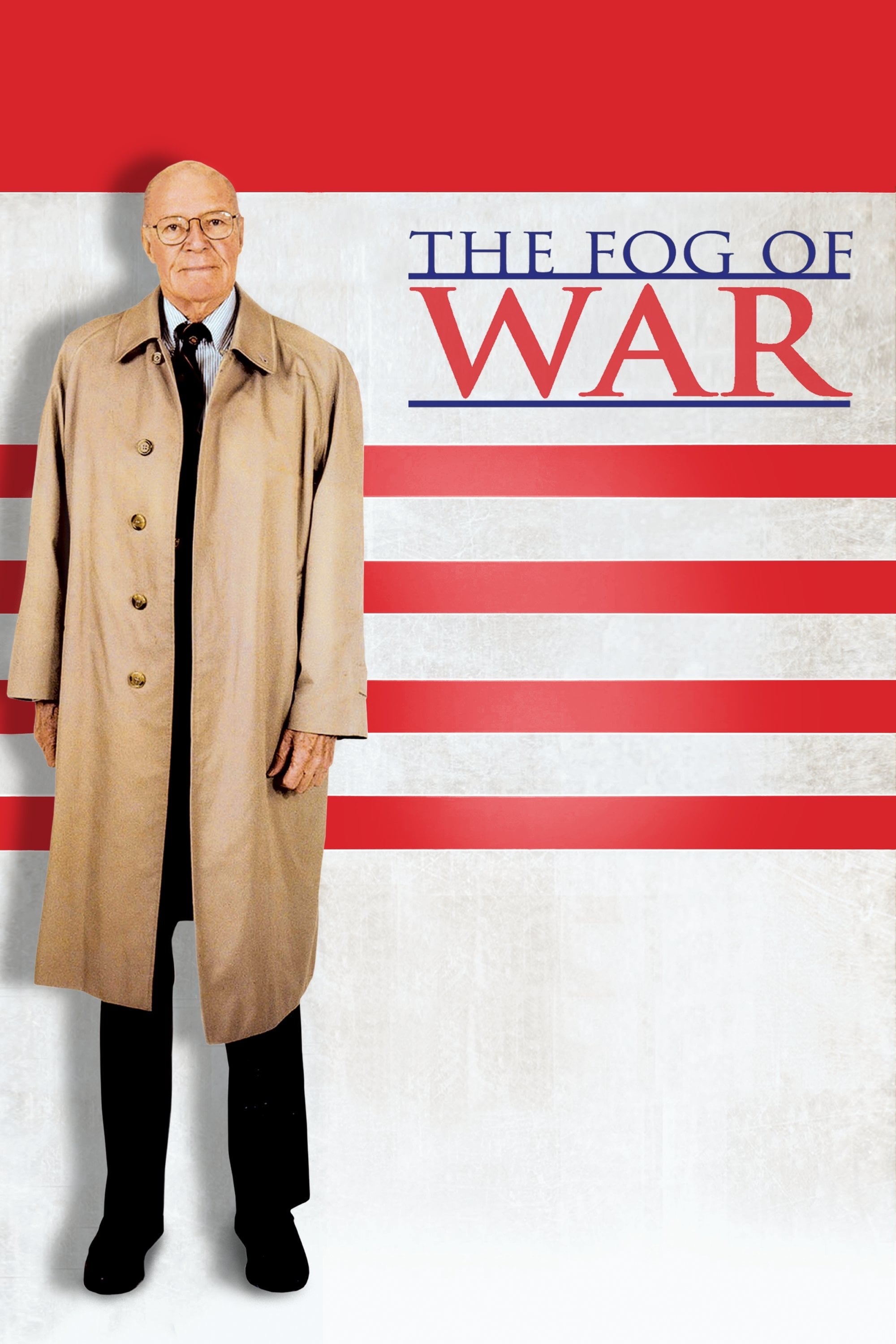
Using archival footage, cabinet conversation recordings, and an interview of the 85-year-old Robert McNamara, The Fog of War depicts his life, from working as a WWII whiz-kid military officer, to being the Ford Motor Company's president, to managing the Vietnam War as defense secretary for presidents Kennedy and Johnson.
A unit of American military advisors in Vietnam prior to the major U.S. involvement finds similarities between their helpless struggle against the Viet Cong and the doomed actions of a French unit at the same site a decade before.
A love letter from a young mother to her daughter, the film tells the story of Waad al-Kateab’s life through five years of the uprising in Aleppo, Syria as she falls in love, gets married and gives birth to Sama, all while cataclysmic conflict rises around her. Her camera captures incredible stories of loss, laughter and survival as Waad wrestles with an impossible choice– whether or not to flee the city to protect her daughter’s life, when leaving means abandoning the struggle for freedom for which she has already sacrificed so much.
A compilation of over 30 years of private home movie footage shot by Lithuanian-American avant-garde director Jonas Mekas, assembled by Mekas "purely by chance", without concern for chronological order.
Vietnam vet Frank Vega now runs an East L.A. community center where he trains young boxers to survive in and out of the ring. But when his prize student falls in with the wrong crowd and turns up dead, Frank teams up with his pal Bernie to take matters into their own fists and prove that justice never gets old.
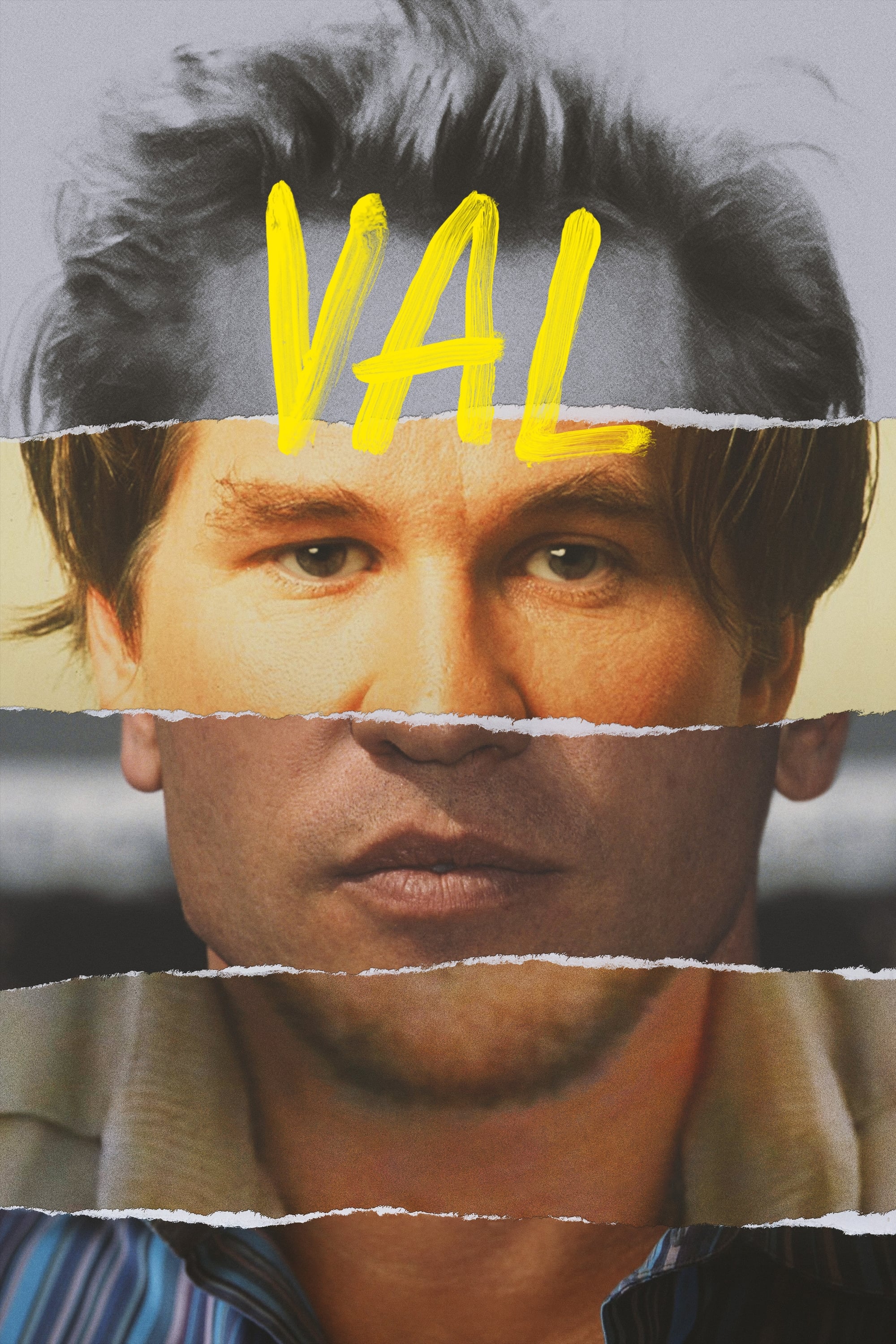
For over 40 years Val Kilmer, one of Hollywood’s most mercurial and/or misunderstood actors has been documenting his own life and craft through film and video. He has amassed thousands of hours of footage, from 16mm home movies made with his brothers, to time spent in iconic roles for blockbuster movies like Top Gun, The Doors, Tombstone, and Batman Forever. This raw, wildly original and unflinching documentary reveals a life lived to extremes and a heart-filled, sometimes hilarious look at what it means to be an artist and a complex man.
A docudrama depicting a hypothetical nuclear attack on Britain. After backing the film's development, the BBC refused to air it, publicly stating "the effect of the film has been judged by the BBC to be too horrifying for the medium of broadcasting." It debuted in theaters in 1966 and went on to great acclaim, but remained unseen on British television until 1985.
The definitive documentary on the history of nudity in feature films from the early silent days to the present, studying the changes in morality that led to the use of nudity in films while emphasizing the political, sociological and artistic changes that shaped that history. Skin will also study the gender inequality in presenting nude images in motion pictures and will follow the revolution that has created nude gender equality in feature films today.
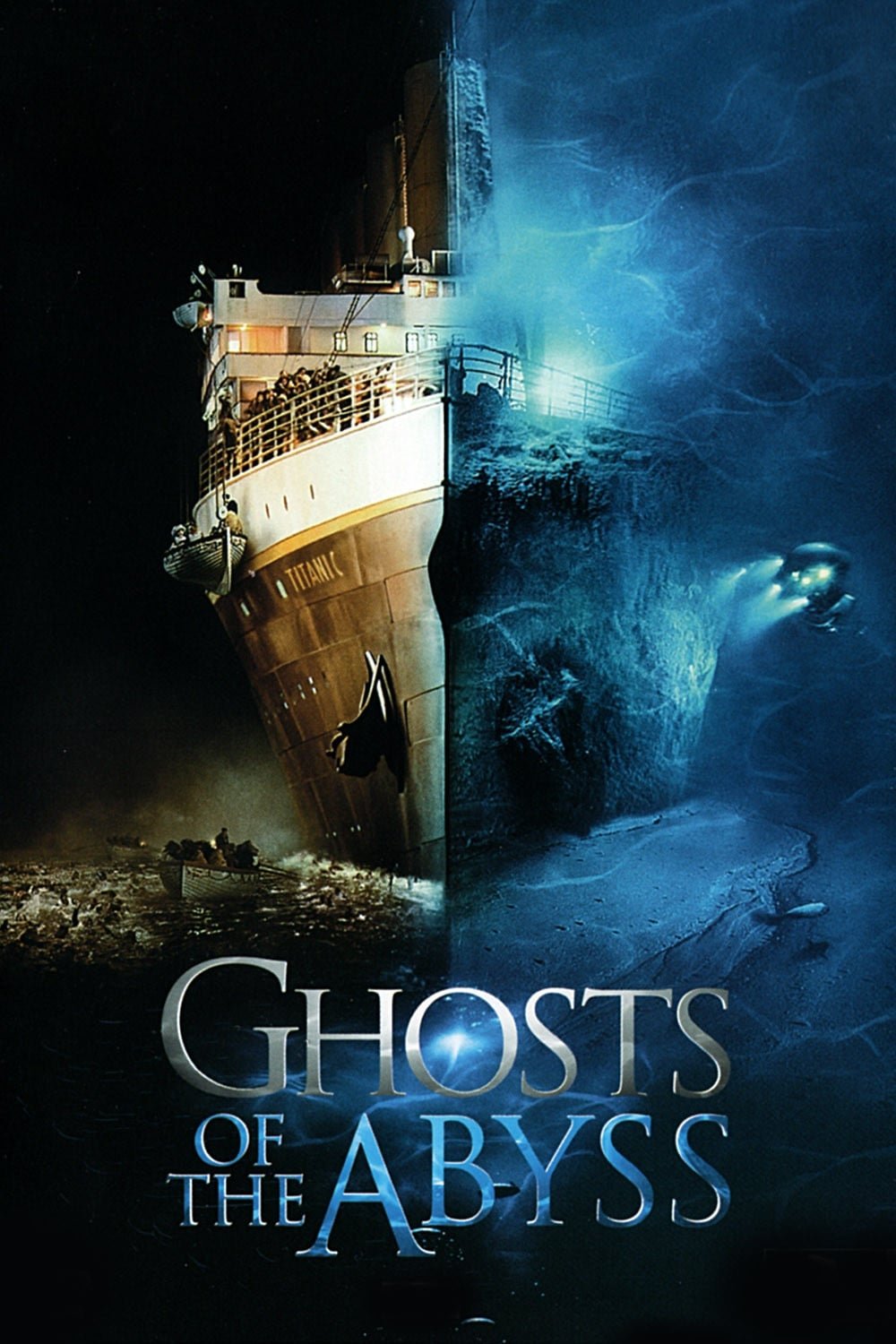
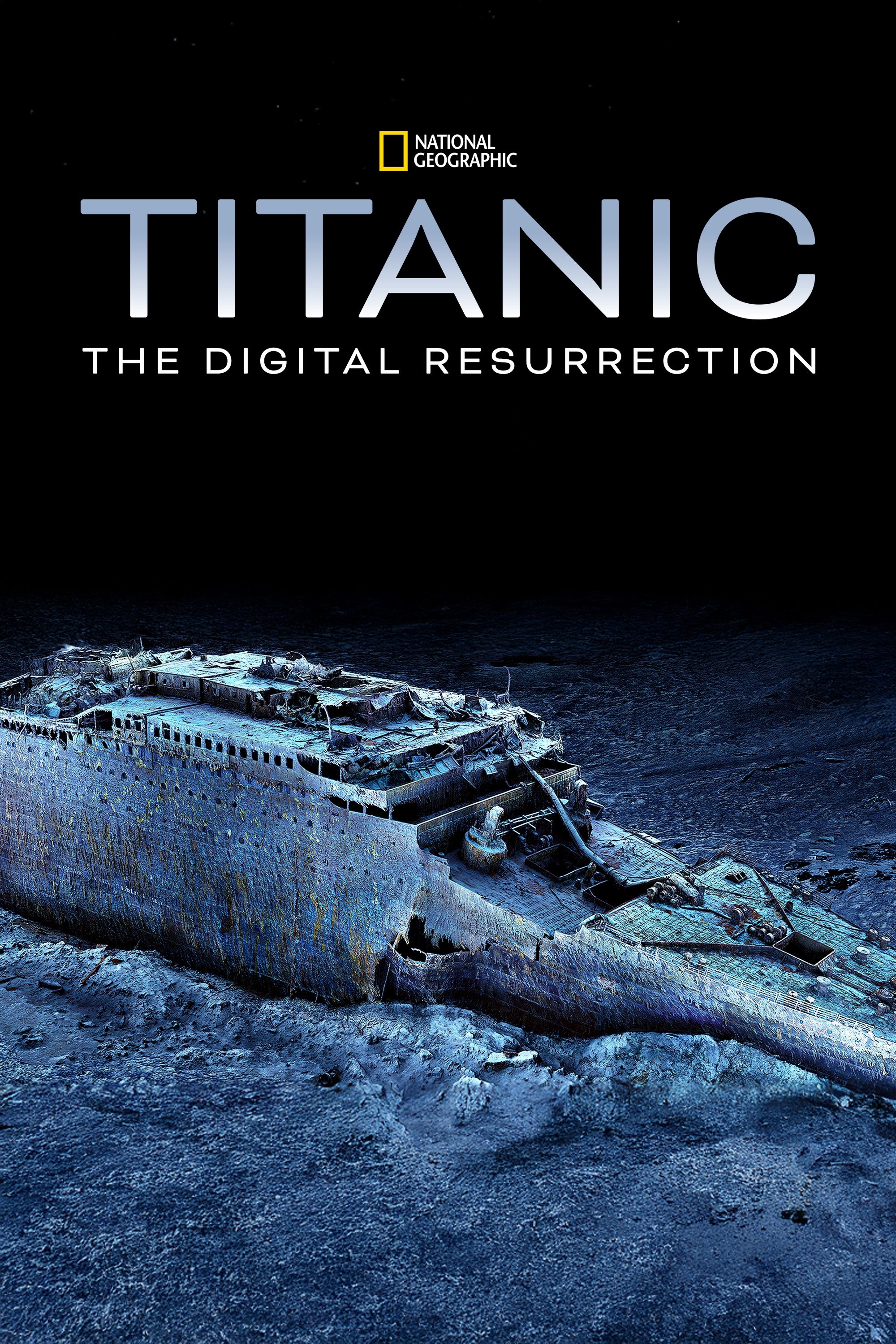
With a team of the world's foremost historic and marine experts as well as friend Bill Paxton, James Cameron embarks on an unscripted adventure back to the wreck of the Titanic where nearly 1,500 souls lost their lives almost a century ago.
A man takes over a TV station and holds a number of hostages as a political platform to awaken humanity, instead of money.
The special focuses on how Star Wars is relevant today and the history that inspired it, and also makes various connections to Greek mythology. It consists of several interviews with well-known politicians, journalists, and critics, along with historical content and clips from all six of the Star Wars movies.
The most famous murder scene in movie history comprises 78 camera settings and 52 cuts: the shower scene in Alfred Hitchcock's Psycho. 78/52 tells the story of the man behind the curtain and his greatest obsession.
For the 20th anniversary of "Titanic," James Cameron reopens the file on the disaster.
John Rambo is released from prison by the government for a top-secret covert mission to the last place on Earth he'd want to return - the jungles of Vietnam.