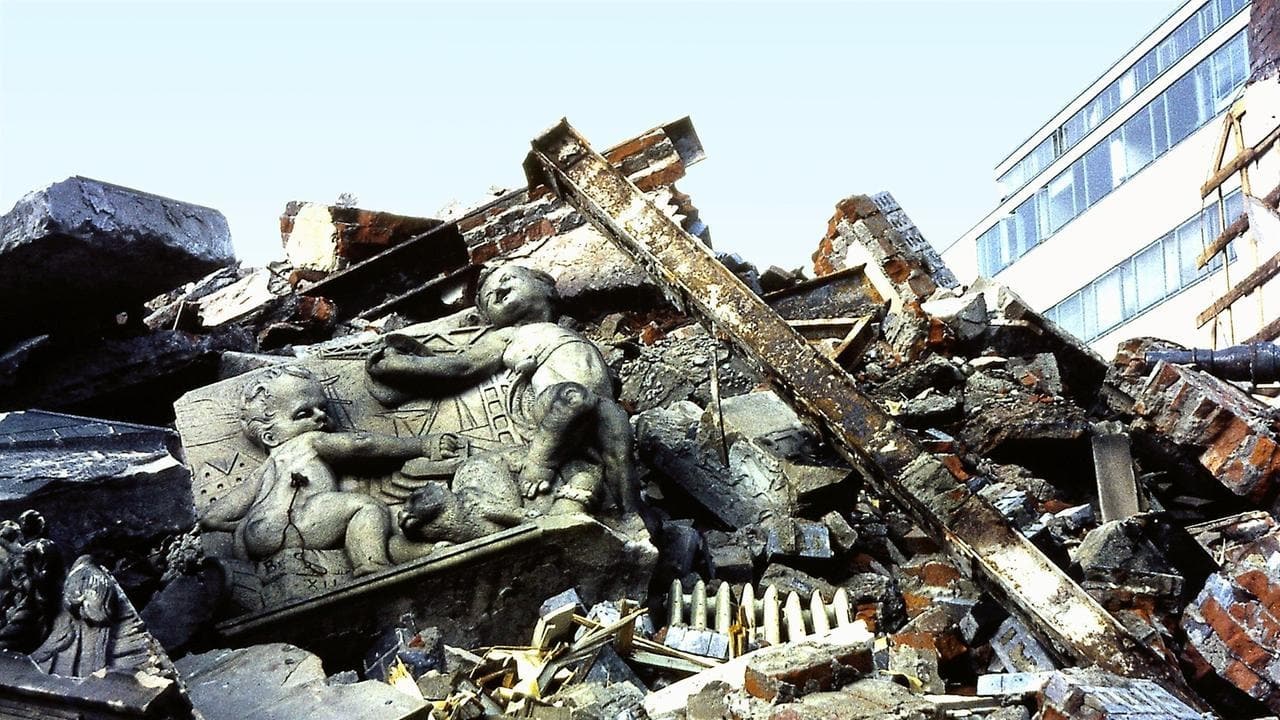
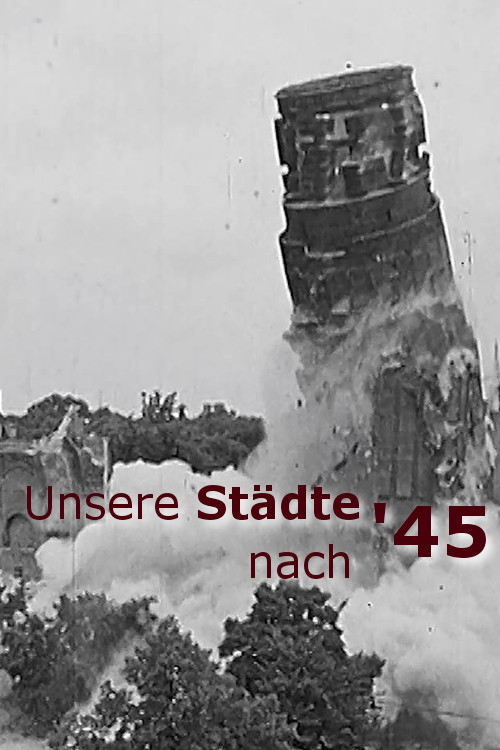
A documentation about the reconstruction and destruction of german cities after the 2nd World War.
Social & External
Narrator
An increasing number of people in Germany no longer want anything to do with their state. A mixture of idiosyncrats and anti-system activists are turning their backs on the Federal Republic. How did the "Reichsbürger" movement become radical? What are their motives? What emerges is a European community of anarchists, businessmen, esotericists and adventurers - between a self-declared fight for freedom and obstinacy.
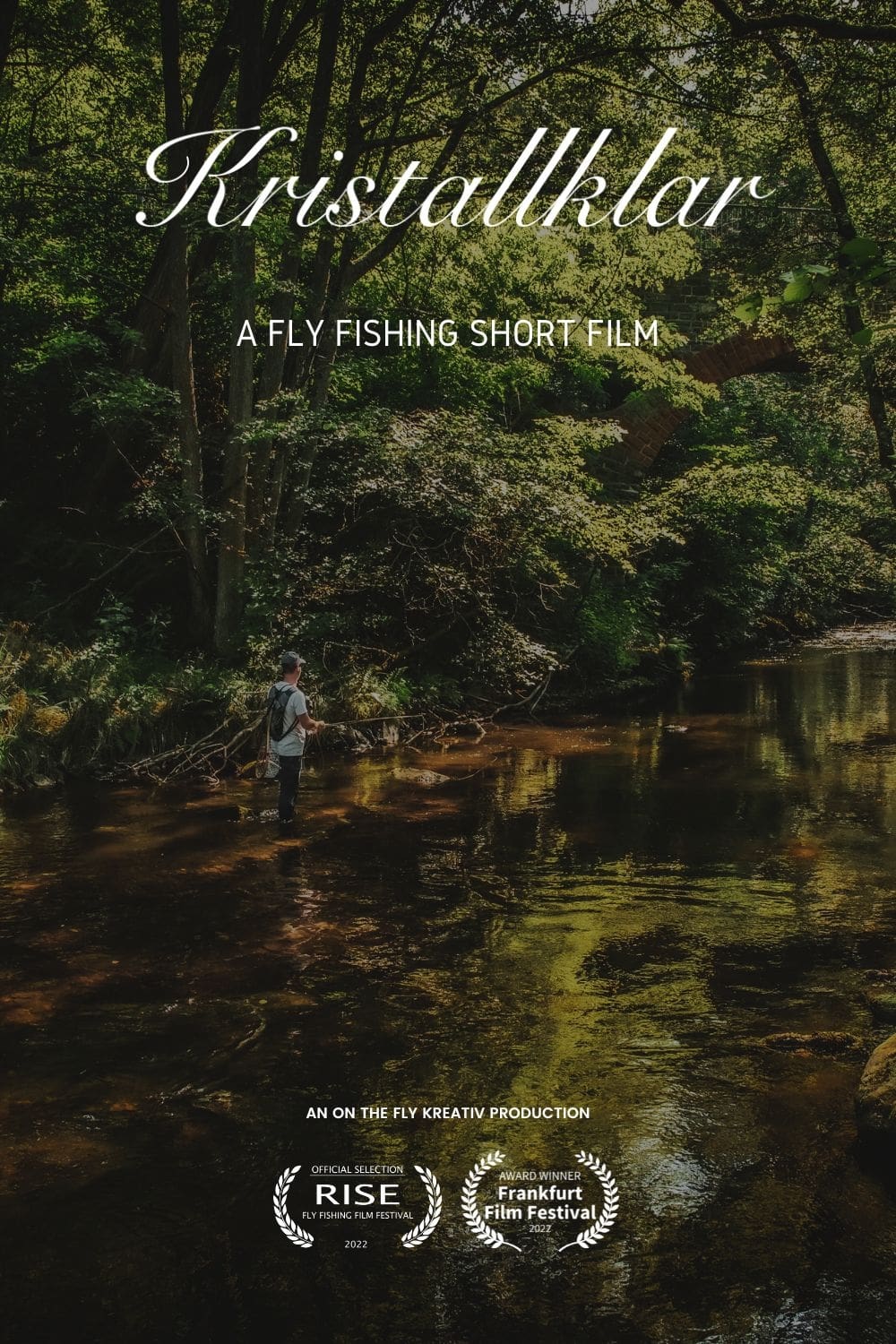
Kristallklar tells the tale of a hidden river holding wild brown trout near the border of Luxembourg and Germany. Find out about this magical river from the perspective of Kirill, who recently acquired the lease to the fishing rights of the river and a small tributary thereof. It captures the essence of a fly fishing adventure on the river embarked on by the incredibly passionate Kirill and two companions: Nic, a fly fishing scientist and Simon, the filmmaker. The film tries to capture the feeling of the magnificent surroundings and being at peace on the river. It also delves into topics of conservation of nature and the plans to re-stock the river with native crayfish which vanished from the river. A lot of love went into this film the hope is that it inspires those around the world to find a love for the outdoors and to preserve it for many years to come and just to get out there and fly fish.
Prost takes you inside Bavaria’s Upper Franconia—home to more breweries per capita than anywhere else in the world. From ancient cellars to bustling beer gardens, this two-part film explores how beer shapes culture, tradition, and community in the region proudly known as “BierLand.”
In the months and years following the end of the World War Two, Allied forces faced a series of bombings and attacks in occupied Germany. Nazi loyalists attempted to derail the rebuilding process by killing any Germans collaborating with the enemy. And the mysterious SS-Werewolves underground organization boasted of the coming rebirth of the Party.
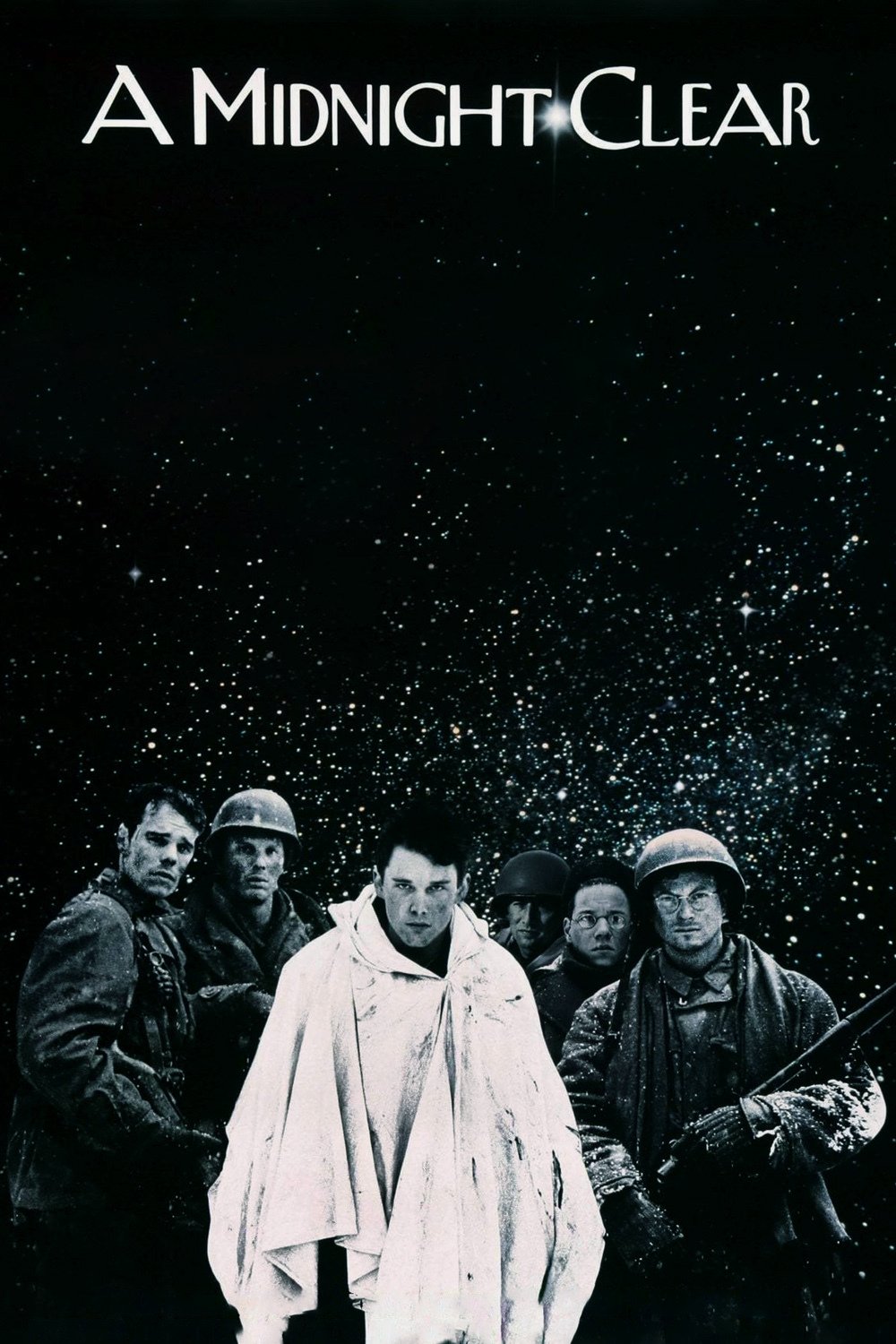
In 1944 France, an American Intelligence Squad locates a German Platoon wishing to surrender rather than die in Germany's final war offensive. The two groups of men, isolated from the war at present, put aside their differences and spend Christmas together before the surrender plan turns bad and both sides are forced to fight the other.
Recent archaeological discoveries in Germany have changed the way we look at Celtic society and the major role played by women.
The film Together we cycle investigates the critical events that has led to the revival of the Dutch cycling culture. For most people, cycling in the Netherlands, seems a natural phenomenon. However, until the 1970s the development of mobility in the Netherlands followed trents across the globe. The bicycle had had its day, and the future belonged to the car. The only thing that had to be done was to adapt cities to the influx of cars. Then Dutch society took a different turn. Against all odds people kept on cycling. The question why this happened in the Netherlands, has not an easy answer. There are many factors, events and circumstances that worked together, both socially and policy-wise. In Together we cycle, key players tell the story of the bumpy road which led to the current state. Where cycling is an obvious choice for most citizens.
The trembling starts in his neck when Markus gets closer to the images that have chased him for 49 years. Now he steers his motor home south, as far away from his past as possible.
A mind-bending, thrilling journey exploring the fragility and wonder of planet Earth, one of the most peculiar, unique places in the entire universe, brought to life by the only people to have left it behind – the world’s most well known and leading astronauts. This edit combined episodes one and ten to create a new movie.
Nestled behind high mountains and dark forests lies Triberg, the birthplace of the cuckoo clock. For centuries, this cult item has been handcrafted right here, attracting tourists from all over the world. Ever since the boom of the 1980s has faded, the cuckoo clock has gradually lost its appeal and magic. And so has the place, which now resembles a ghost town. Its residents however still believe in their clock: Vendors, clockmakers and tourist guides alike fight to preserve their beloved heritage. Between abandoned restaurants and souvenir shops they hope for new tourists, while the clock continues ticking away.
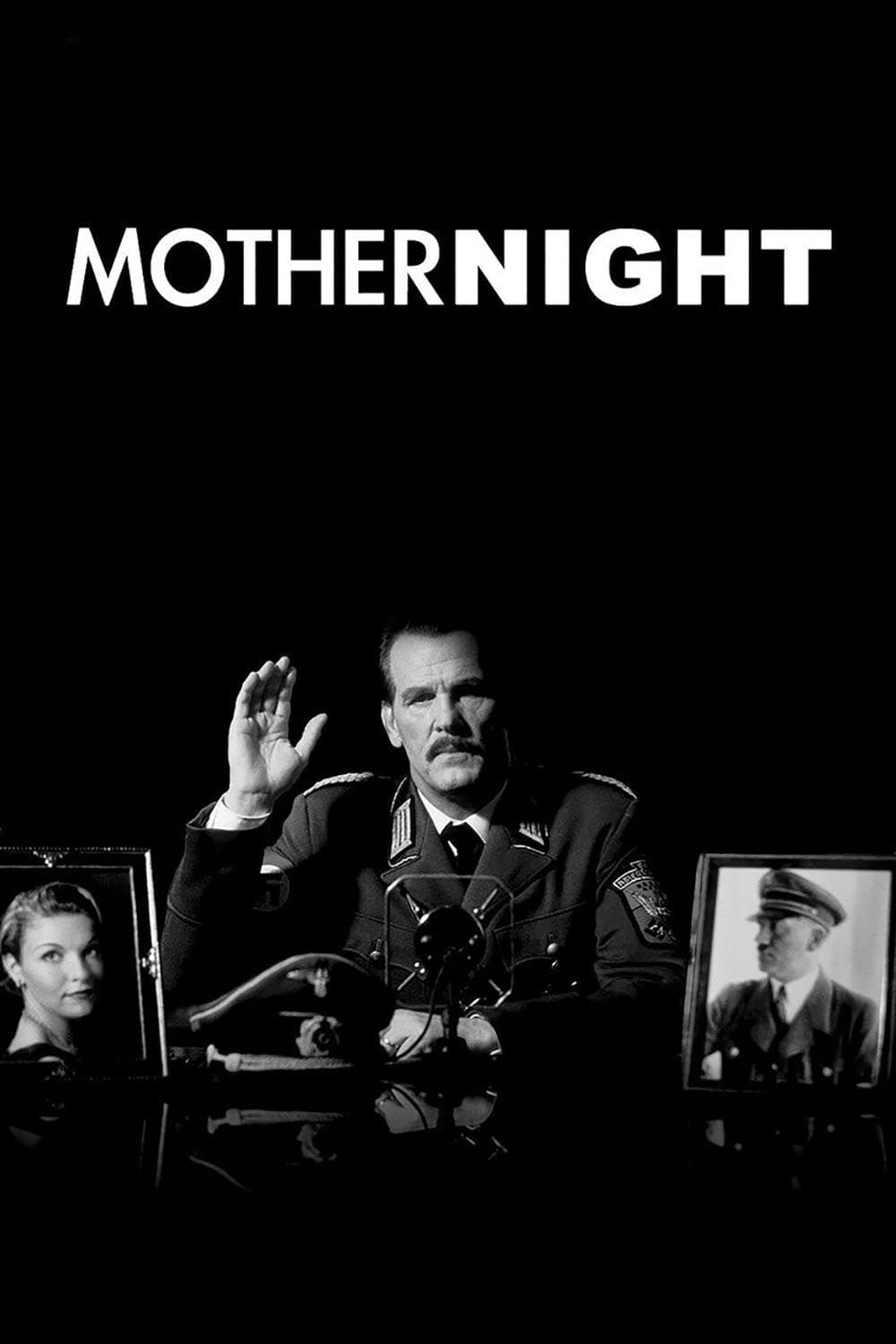
An American spy behind the lines during WWII serves as a Nazi propagandist, a role he cannot escape in his future life as he can never reveal his real role in the war.
In today's climate debate, there is only one factor that cannot be calculated in climate models - humans. How can we nevertheless understand our role in the climate system and manage the crisis? Climate change is a complex global problem. Increasingly extreme weather events, rising sea levels, and more difficult living conditions - including for us humans - are already the order of the day. Global society has never faced such a complex challenge. For young people in particular, the frightening climate scenarios will be a reality in the future. For the global south, it is already today. To overcome this crisis, different perspectives are needed. "THE UNPREDICTABLE FACTOR" goes back to the origins of the German environmental movement, accompanies today's activists in the Rhineland in their fight against the coal industry and gives a voice to scientists from climate research, ethnology and psychology.

The events in Sarajevo in June 1914 are the backdrop for a thriller directed by Andreas Prochaska and written by Martin Ambrosch, focusing on the examining magistrate Dr. Leo Pfeffer (Florian Teichtmeister) investigating the assassination of Archduke Franz Ferdinand. Trying to do his job in a time of lawlessness and violence, intrigues and betrayal, Leo struggles to maintain his integrity and save his love, Marija, and her father, prominent Serbian merchant. But the events of Sarajevo have set into motion an inescapable course of events that will escalate to become … the Great War.
In World War II. African-American GIs liberate Germany from Nazi rule while racism prevailed in their own army and home country. Returning home they continue fighting for their own rights in the civil rights movement.
A man's story parallels Hitler's rise. Austrian Klaus Schneider, wounded in World War I, recovers in the care of Dr. Emil Bettleheim. Bettleheim discovers that Schneider possesses powers of empathy and of clairvoyance, such that could aid suicidal patients. After the war, with one friend as his manager and another as his lover, Schneider changes his name to Eric Jan Hanussen and goes to Berlin, as a hypnotist and clairvoyant performing in halls and theaters. He always speaks the truth, which brings him to the attention of powerful Nazis. He predicts their rise (good propaganda for them) and their violence (not so good). He's in pain and at risk. What is Hanussen's future?
A 9th century woman of English extraction born in the German city of Ingelheim disguises herself as a man and rises through the Vatican ranks.
In 1924, Oskar Matzerath is born in the Free City of Danzig. At age three, he falls down a flight of stairs and stops growing. In 1939, World War II breaks out.
This is a conversation starter first, a video second.
A documentary of the German national soccer team’s 2006 World Cup experience that changed the face of modern Germany.
Filmmaker Alain Resnais documents the atrocities behind the walls of Hitler's concentration camps.
The history of cinematic sound, told by legendary sound designers and visionary filmmakers.
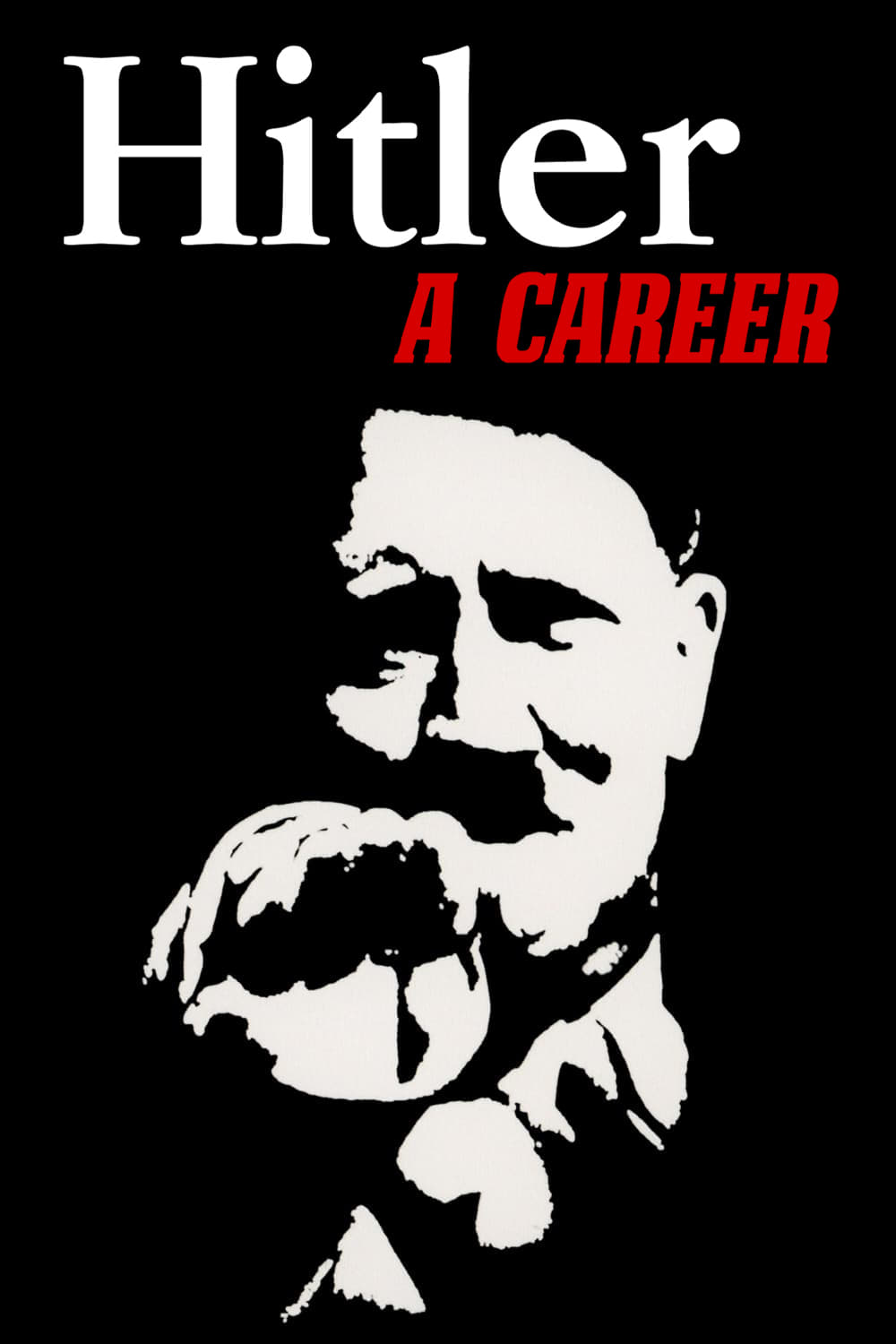
A keen chronicle of the unlikely rise to power of Adolf Hitler (1889-1945) and a dissection of the Third Reich (1933-1945), but also an analysis of mass psychology and how the desperate crowd can be deceived and shepherded to the slaughterhouse.
Oliver Stone charts the history of the United States from the Second World War to the present.
Diaries, audiotapes, videotapes and testimonials from friends and colleagues offer insight into the life and career of Gilda Radner -- the beloved comic and actress who became an icon on Saturday Night Live.
A visual montage portrait of our contemporary world dominated by globalized technology and violence.
Experience the events of September 11, 2001 through the eyes of President Bush and his closest advisors as they personally detail the crucial hours and key decisions from that historic day.
A documentary highlighting the Soviet Union's legendary and enigmatic hockey training culture and world-dominating team through the eyes of the team's Captain Slava Fetisov, following his shift from hockey star and celebrated national hero to political enemy.
Cameramen and women discuss the craft and art of cinematography and of the "DP" (the director of photography), illustrating their points with clips from 100 films, from Birth of a Nation to Do the Right Thing. Themes: the DP tells people where to look; changes in movies (the arrival of sound, color, and wide screens) required creative responses from DPs; and, these artisans constantly invent new equipment and try new things, with wonderful results. The narration takes us through the identifiable studio styles of the 30s, the emergence of noir, the New York look, and the impact of Europeans. Citizen Kane, The Conformist, and Gordon Willis get special attention.
When Allied forces liberated the Nazi concentration camps in 1944-45, their terrible discoveries were recorded by army and newsreel cameramen, revealing for the first time the full horror of what had happened. Making use of British, Soviet and American footage, the Ministry of Information’s Sidney Bernstein (later founder of Granada Television) aimed to create a documentary that would provide lasting, undeniable evidence of the Nazis’ unspeakable crimes. He commissioned a wealth of British talent, including editor Stewart McAllister, writer and future cabinet minister Richard Crossman – and, as treatment advisor, his friend Alfred Hitchcock. Yet, despite initial support from the British and US Governments, the film was shelved, and only now, 70 years on, has it been restored and completed by Imperial War Museums under its original title "German Concentration Camps Factual Survey".
A documentary on the expletive's origin, why it offends some people so deeply, and what can be gained from its use.
A comedic, brutally honest documentary following self-destructive TV writer Dan Harmon as he takes his live podcast on a national tour.
The life and career of one of comedy's most inimitable modern voices, Mr. Gilbert Gottfried.
A documentary about the making of season five of the acclaimed AMC series Breaking Bad.
A documentary about the design of cities, which looks at the issues and strategies behind urban design and features some of the world's foremost architects, planners, policymakers, builders, and thinkers.
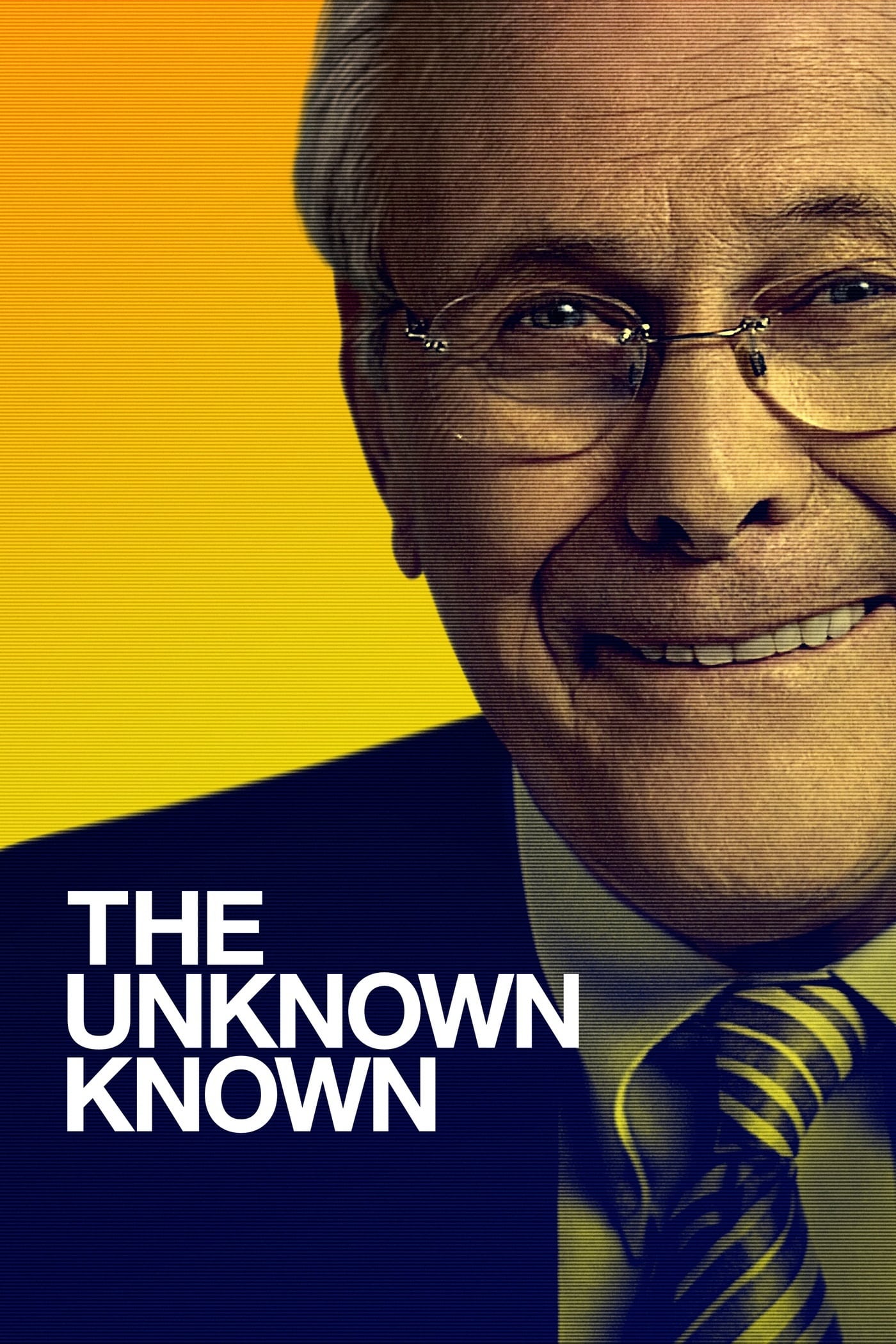
Former United States Secretary of Defense, Donald Rumsfeld, discusses his career in Washington D.C. from his days as a congressman in the early 1960s to planning the invasion of Iraq in 2003.
During the Cold War, an American scientist appears to defect to East Germany as part of a cloak and dagger mission to find the formula for a resin solution—but the plan goes awry when his fiancee, unaware of his motivation, follows him across the border.
Not since the invention of the Internet has there been such a disruptive technology as Bitcoin. Bitcoin's early pioneers sought to blur the lines of sovereignty and the financial status quo. After years of underground development Bitcoin grabbed the attention of a curious public, and the ire of the regulators the technology had subverted. After landmark arrests of prominent cyber criminals Bitcoin faces its most severe adversary yet, the very banks it was built to destroy.
A documentary on the making of the three Godfather films, with interviews and recollections from the film makers and cast. This feature also includes the original screen tests of some of the actors for "The Godfather" film, and some candid moments on the set of "The Godfather: Part III."
Amid the failing counteroffensive, a journalist follows a Ukrainian platoon on their mission to traverse one mile of heavily fortified forest and liberate a strategic village from Russian occupation. But the farther they advance through their destroyed homeland, the more they realize that this war may never end.
This documentary movie is about the battle of San Pietro, a small village in Italy. Over 1,100 US soldiers were killed while trying to take this location, that blocked the way for the Allied forces from the Germans. Preserved by the Academy Film Archive in 2005.