

Social & External
Self
Unknown Role
Guided Tour is a television and radio program about the treasures of the Portuguese cultural heritage. Treasures with recognized universal value, pieces that any western country would be proud to integrate into its heritage, and little known to the Portuguese. From a silver goblet with Mozarabic decoration and a thousand years old to a cloister that is referred to as a masterpiece of European Renaissance, passing through a collection of African art classified as one of the best in the world, the nature of objects, their context geographic location and historical time vary from episode to episode.
The fascinating stories of the families behind the food that built America, those who used brains, muscle, blood, sweat and tears to get to America's heart through its stomach, those who invented new technologies and helped win wars.
In the spring of 1798, Napoleon set out with 38,000 men and 10,000 sailors to conquer Egypt.
Through new discoveries in science and archaeology, explorers take a look at the origins of the Vikings and how they influenced history.
A look into the Belgian colonisation of Congo through interviews of both colonials as Congolese people that lived it.
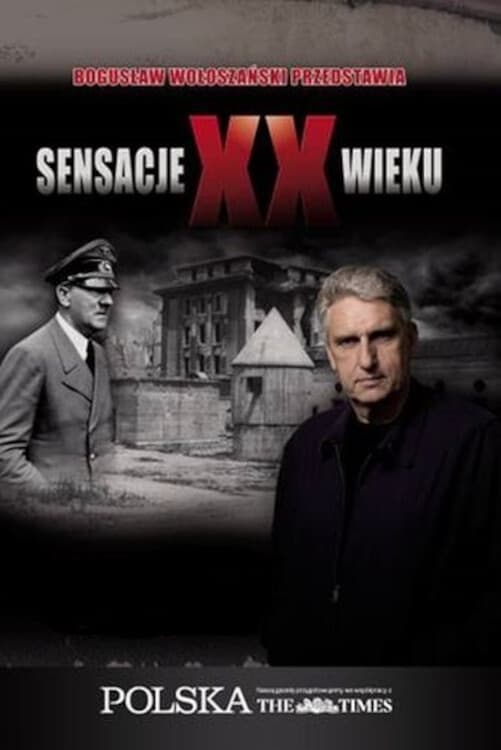
About Adolf Hitler's time in Germany. On January 30, 1933, Adolf Hitler was appointed Chancellor of Germany and his tenure in power lasted for more than twelve years. It began with a standing ovation and ended after a world war in which 50 million people were killed.

The naturalist visits uncharted territory in pursuit of new discoveries. Steve Backshall takes on physical challenges, encounters extraordinary wildlife and meets remarkable people.
Stories from the perspective of some of the world's oldest living creatures - trees. Each tree is located in a completely unique habitat around the world, and hosts, feeds and shelters an array of animals in its embrace.
How the constitution of the largest Democratic Republic in the world was created.
Caroline Randall Williams, an award-winning writer, cookbook author and restaurateur, travels the United States uncovering the fascinating, essential and often untold black stories behind American food.
How To Survive the End of the World examines terrifying and scientifically plausible doomsday scenarios by exploring distinct, world-threatening events and the methods by which humanity would fight to survive against grim odds.
The Earth’s continents are instantly recognizable. These iconic landmasses seem permanent and unchanging, yet they are merely the wreckage of a much larger long-lost supercontinent – Pangaea. In this stunning four part series Professor Iain Stewart uncovers the evidence for this ancient past. He reveals how the world around us is full of clues – in the rocks, the landscapes and even the animals. All of which tell us how the land we live on was created.
From Lucrezia Borgia to Malinche to Marie Curie: Women’s contributions have often been downplayed or misrepresented in the history books. Duels of History (re)tells their stories.
The story of the ill-fated ocean liner and the sinking that made it infamous.
In four chapters, largely based on and illustrated with archaeological finds and sites, Neil Oliver explains how, as far as is known, the Iron Age Celtic tribes known as the Ancient Britains evolved and entered European civilization. Their internecine tribal phase was warlike and partitioned. Overseas contacts, especially metal trade, brought wealth and progress. Ultimately, it attracted the superior Roman empire, which would conquer and pacify Britain into a province, like Gaul shortly before, but Caesar's invasion wasn't the definitive annexation yet, that was left to emperor Claudius; even afterward some Celtic traits and even rebellions remained.
TV's most-watched history series brings to life the compelling stories from our past that inform our understanding of the world today.
Infographics and archival footage deliver bite-size history lessons on scientific breakthroughs, social movements and world-changing discoveries.
Horizon tells amazing science stories, unravels mysteries and reveals worlds you've never seen before.
Doctor Who Confidential is a documentary to complement the revival of the long-running British science fiction television series Doctor Who. Each episode was broadcast on BBC Three on Saturdays, immediately after the broadcast of the weekly television episode on BBC One. The running time of the first two series was 30 minutes, being extended to 45 minutes in the third. BBC Three also broadcast a cut-down edition of the programme, lasting 15 minutes, shown after the repeats on Sundays and Fridays and after the weekday evening repeats of earlier seasons.
Biography is a documentary television series. It was originally a half-hour filmed series produced for CBS by David Wolper from 1961 to 1964 and hosted by Mike Wallace. The A&E Network later re-ran it and has produced new episodes since 1987. The older version featured historical figures such as Helen Keller and Mark Twain, or long-dead entertainment figures such as Will Rogers or John Barrymore. The A&E series has placed the emphasis on such people as Marilyn Monroe, Elvis Presley, Plácido Domingo, Freddie Mercury, Jacqueline Kennedy Onassis, Eric Clapton, Pope John Paul II, Gene Tierney, Selena, Diego Rivera, Mao Zedong and Queen Elizabeth II, and fictional characters like The Phantom, Superman, Hamlet, Betty Boop, and Santa Claus. The program ended up profiling enough figures that in 1999, A&E spun it off into an entire network, The Biography Channel.
Motoring programme featuring reviews of and reports about cars of all types.
Experience the wonders of our world like never before in this epic series from Jon Favreau and the producers of Planet Earth. Travel back 66 million years to when majestic dinosaurs and extraordinary creatures roamed the lands, seas, and skies.
Sharpe is a British series of television dramas starring Sean Bean as Richard Sharpe, a fictional British soldier in the Napoleonic Wars. Sharpe is the hero of a number of novels by Bernard Cornwell; most, though not all, of the episodes are based on the books. Produced by Celtic Films and Picture Palace Films for the ITV network, the series was shot mainly in Turkey and the Crimea, although some filming was also done in England, Spain and Portugal. The series originally ran from 1993 to 1997. In 2004, as part of ITV's new set of drama, ITV announced that it intended to produce new episodes of Sharpe, in co-production with BBC America, loosely based on his time in India, with Sean Bean continuing his role as Sharpe. Sharpe's Challenge is a two-part adventure; part one premiered on ITV on 23 April 2006, with part two being shown the following night. With more gore than earlier episodes, the show was broadcast by BBC America in September 2006.
An in-depth look at the history and pop cultural significance of horror films.
The history of the sport of baseball in America, told through archival photos, film footage, and the words of those who contributed to the game in each era. Writers, historians, players, baseball personnel, and fans review key events and the significance of the game in America's history.
A documentary series that gives a historical account of the events of World War II, from its roots in the 1920s to the aftermath and the lives it profoundly influenced.
The Walking Dead: Origins is a series of specials exploring the journeys of the series' most celebrated characters. Each episode charts the story of the zombie apocalypse from the point of view of a single character and features new interviews and narrations from the actors that portray these iconic characters, interwoven with clips from the most pivotal moments of their journeys so far.
A documentary on the American Civil War narrated by Ken Burns, covering the secession of the Confederacy to the assassination of Abraham Lincoln.
Have you ever wondered how the products you use every day are made? How It's Made leads you through the process of how everyday products, such as apple juice, skateboards, engines, contact lenses, and many more objects are manufactured.
Documentary series tracking the dreams and worries of Wrexham, a working-class town in North Wales, UK, as two Hollywood stars (Rob McElhenney and Ryan Reynolds) take ownership of the town’s historic yet struggling football club.
An insider's look at the engineering and scientific miracles behind the things that form the modern world.
30 for 30 is the title for a series of documentary films airing on ESPN, its sister networks, and online highlighting interesting people and events in sports history. This currently includes four "volumes" of 30 episodes each, a 13-episode series under the ESPN Films Presents title in 2011–2012, and a series of 30 for 30 Shorts shown through the ESPN.com website. The series has also expanded to include Soccer Stories, which aired in advance of the 2014 FIFA World Cup, and audio podcasts. This entry refers to the main Volumes of the series presented by ESPN
Modern history can be divided into two time frames: before 9/11 and after 9/11. This five-part docuseries is a cohesive chronicle of the September 11, 2001 attacks on the U.S., offering illuminating perspectives and personal stories of how the catastrophic events of that day changed the course of the nation.
Told from the perspective of the rebel leaders, the series chronicles a wave of rebellions against absolute power by those the Roman Empire called “barbarians” – tribes they viewed as beyond the fringe of civilization that lived a brutish and violent existence. But these also were men and women who launched epic struggles that shaped the world to come with a centuries-long fight to defeat the sprawling empire.
In a docuseries set at one of NCAA football's most fertile recruiting grounds, guys with red flags seek to prove their worth on the field and in class.