
Documentary about the Swedish submarine Ulven which was sunk by a mine in Swedish waters in 1943 killing all 33 crew members.
Social & External
Self
An in depth look at the persecution and subsequent death of the 5 million non Jewish victims of the World War II Holocaust and the lives of those who survived. Through stories of survivors and historical footage, these lesser known voices are brought to life. From the Roma and Sinti people who were also targeted for complete annihilation to the thousands of Catholic Priests who were killed for speaking out, Forget Us Not strives to educate and give tribute to those who were killed for their religion, ethnicity, political views, sexual orientation and physical handicaps.
An hour long documentary on the war in the Pacific. Using Marine Corps color footage, the only footage of its kind, it traces the major battles, including Saipan, hew Jima and more narrated by Marine Corps veteran Lee Marvin.
The Polish city of Łódź was under Nazi occupation for nearly the entirety of WWII. The segregation of the Jewish population into the ghetto, and the subsequent horrors are vividly chronicled via newsreels and photographs. The narration is taken almost entirely from journals and diaries of those who lived–and died–through the course of the occupation, with the number of different narrators diminishing as the film progresses, symbolic of the death of each narrator.
A documentary examining possible historical and modern conspiracies surrounding Christianity, the 9/11 terrorist attacks, and the Federal Reserve bank.
World War II comes to an end. Tokyo is a destroyed place, without law, driven by hunger and greed. From over 100,000 pages of declassified CIA documents and hours of newly discovered footage, recorded by American occupation charges and private individuals, the documentary shows Tokyo during this crucial year, Year Zero. Observed from the point of view of a young man who finds himself transported in time, the NHK documentary uses color images and state-of-the-art video techniques to reveal how a desperate population is published as the foundations of today's megalopolis.
This is a rare look at one of the worst horror stories in the long infamous history of warfare. This series features captured German and Russian film footage, much of which has never been seen before. For decades the Cold War prevented us from looking closely at what really happened between the Russians and the Germans on the Eastern Front during World War II. More than a struggle between nations, it pitted maniacal tyrant against maniacal tyrant, evil ideology against evil ideology. The lives of tens of millions of human beings were consumed by its raging hatreds and appalling indignities. One in every ten Russians died. One in every four Poles died. Whole divisions of Italians, Romanians, Hungarians disappeared with barely a trace. An average of 17,800 people died on every single day and this, the war on the Russian German Front, lasted for 1,400 days. This series features captured German and Russian film footage, much of which has never been seen before.


The film is a search for Peter Gasparik's grandfather Stefan Truban, who was a resistance fighter and concealed the persecuted, defectors and Jews during World War II. Through private history we get to global history.
A documentary exploring how Albanians, including many Muslims, helped and sheltered Jewish refugees during WWII at their own risk, and trying to help the son of an Albanian baker that housed a Jewish family for a year return some Hebrew books that the family had to leave behind.
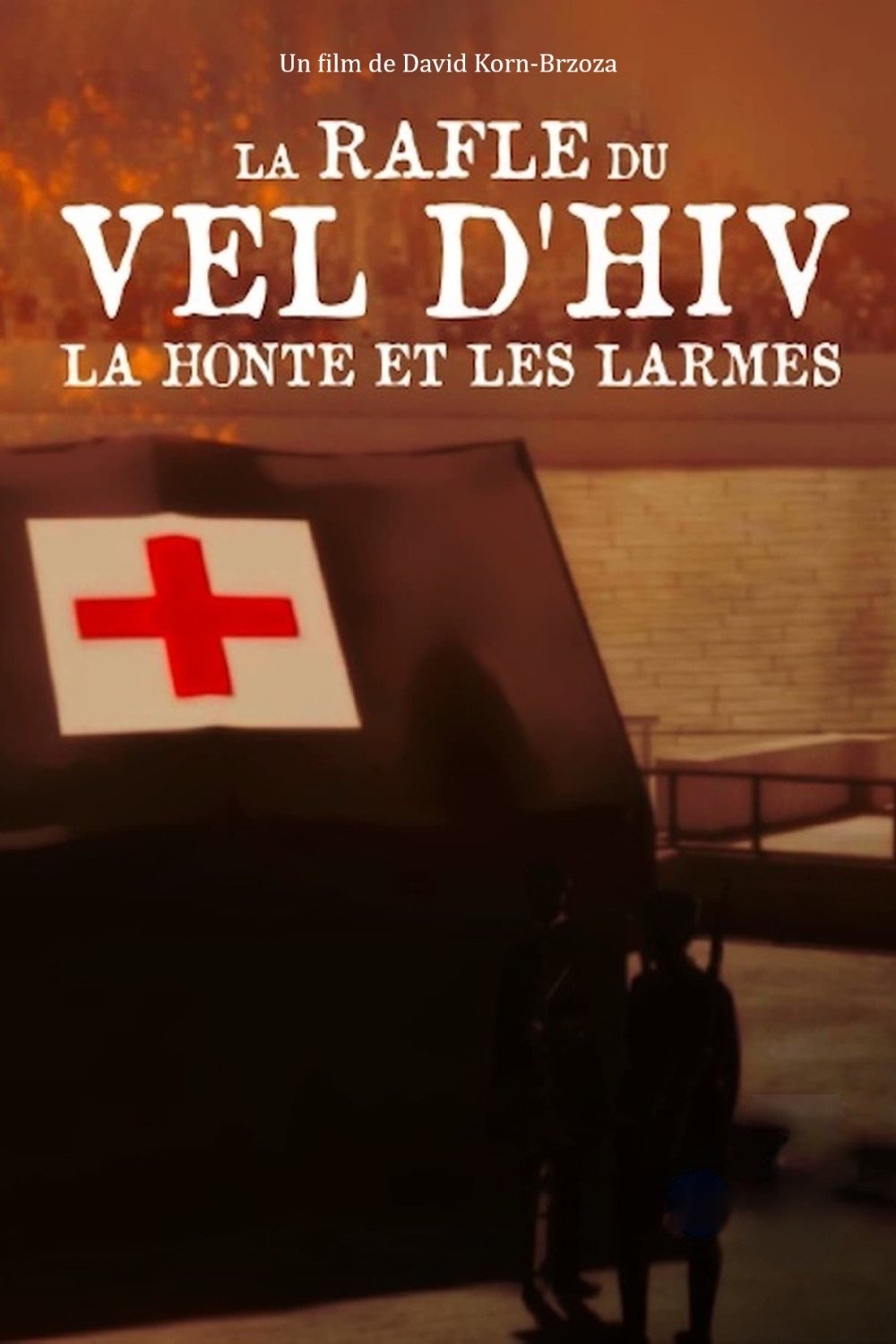
In 1942, more than 8,000 Jews were arrested on 16 and 17 July and sent to the Vélodrome d'Hiver sports center in the 15th district, a stone's throw from the Eiffel Tower, before being deported. The expression "Vel d'Hiv round-up" has become part of our collective memory, to the point of becoming the main memorial reference point for France during the dark years. Based on research carried out in unpublished or rarely explored archives, this film retraces the history of this roundup as experienced by hunted Jews and police trackers, from its planning in the Vichy offices to its hour-by-hour unfolding in the streets of Paris.
After the World War I, Mussolini's perspective on life is severely altered; once a willful socialist reformer, now obsessed with the idea of power, he founds the National Fascist Party in 1921 and assumes political power in 1922, becoming the Duce, dictator of Italy. His success encourages Hitler to take power in Germany in 1933, opening the dark road to World War II. (Originally released as a two-part miniseries. Includes colorized archival footage.)
The extraordinary story of how Hollywood changed World War II – and how World War II changed Hollywood, through the interwoven experiences of five legendary filmmakers who went to war to serve their country and bring the truth to the American people: John Ford, William Wyler, John Huston, Frank Capra, and George Stevens. Based on Mark Harris’ best-selling book, “Five Came Back: A Story of Hollywood and the Second World War.”
The documentary that captures the compelling story and eyewitness account of six survivors in war-torn Netherlands during World War II.
102 Years in the Heart of Europe: A Portrait of Ernst Jünger (Swedish: 102 år i hjärtat av Europa) is a Swedish documentary film from 1998 directed by Jesper Wachtmeister. It consists of an interview by the journalist Björn Cederberg with the German writer, philosopher and war veteran Ernst Jünger (1895-1998). Jünger talks about his life, his authorship, his interests and ideas. The actor Mikael Persbrandt reads passages from some of Jünger's works, such as Storm of Steel, The Worker, On the Marble Cliffs and The Glass Bees.
Between 1942 and 1944 some 24,916 Jews were deported from Belgium to Auschwitz. The roundups and deportations were organized and carried out by the Nazis with the - not always conscious - cooperation of Belgian authorities. The attitude of the authorities here varied from outright resistance to voluntary or unwitting collaboration.
A tribute to the cameramen of the newsreel companies and the service film units, in the form of a compilation of film of the cameramen themselves, their training and some of their most dramatic film.
April 17, 1944. A high-profile trial for sedition opens in Washington. Dozens of individuals—including members of Congress—are accused of cooperating with German forces, participating in pro-Nazi movements, and plotting to overthrow the U.S. government. How did this happen in the world's greatest democracy? And why does no one remember this major episode in American history?
When World War II broke out, John Ford, in his forties, commissioned in the Naval Reserve, was put in charge of the Field Photographic Unit by Bill Donavan, director of the soon-to-be-OSS. During the war, Field Photo made at least 87 documentaries, many with Ford's signature attention to heroism and loss, and many from the point of view of the fighting soldier and sailor. Talking heads discuss Ford's life and personality, the ways that the war gave him fulfillment, and the ways that his war films embodied the same values and conflicts that his Hollywood films did. Among the films profiled are "Battle of Midway," "Torpedo Squadron," "Sexual Hygiene," and "December 7."
On the morning of June 6, 1944, thousands of ships reached the French coast of Normandy as part of an Allied operation to take back France from the Germans. For the next 85 days, U.S., British, and Canadian soldiers engaged in conflicts of unimaginable violence, conquering and liberating the region's cities, but at the cost of hundreds of thousands of lives. From the D-Day invasion to the final Nazi surrender in Argentan, this is the definitive story of the three-month Battle of Normandy as it's never been seen before.
At the height of Hitler's infamous U-boat war, the crew of the U.S.S. Swordfish were heading home after months at sea. They never made it. Now prisoners of war aboard U-boat 429, a small group of American survivors will find their loyalties put to the ultimate test when they're forced to join their German captors to fight for their very lives.
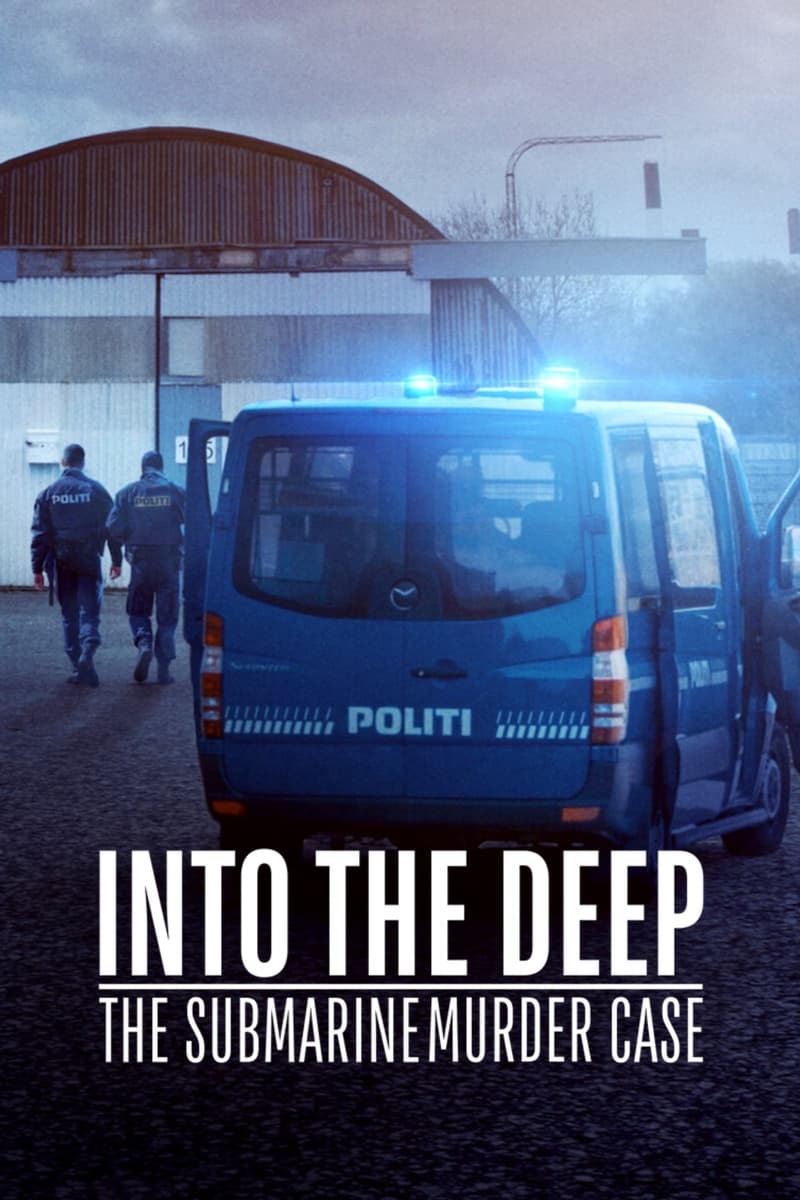
In 2016, a young Austrialian filmmaker began documenting amateur inventor Peter Madsen. One year in, Madsen brutally murdered Kim Wall aboard his homemade submarine. An unprecedented revelation of a killer and the journey his young helpers take as they reckon with their own complicity and prepare to testify.
When Allied forces liberated the Nazi concentration camps in 1944-45, their terrible discoveries were recorded by army and newsreel cameramen, revealing for the first time the full horror of what had happened. Making use of British, Soviet and American footage, the Ministry of Information’s Sidney Bernstein (later founder of Granada Television) aimed to create a documentary that would provide lasting, undeniable evidence of the Nazis’ unspeakable crimes. He commissioned a wealth of British talent, including editor Stewart McAllister, writer and future cabinet minister Richard Crossman – and, as treatment advisor, his friend Alfred Hitchcock. Yet, despite initial support from the British and US Governments, the film was shelved, and only now, 70 years on, has it been restored and completed by Imperial War Museums under its original title "German Concentration Camps Factual Survey".
The haunted Captain of a Soviet submarine holds the fate of the world in his hands. Forced to leave his family behind, he is charged with leading a covert mission cloaked in mystery.
In the midst of World War II, the battle under the sea rages and the Nazis have the upper hand as the Allies are unable to crack their war codes. However, after a wrecked U-boat sends out an SOS signal, the Allies realise this is their chance to seize the 'enigma coding machine'.
Milo and Kida reunite with their friends to investigate strange occurances around the world that seem to have links to the secrets of Atlantis.
The crew of the American destroyer escort, the USS Haynes, detects a German U-Boat—resulting in a prolonged, deadly battle of wits.
Merchant Marine sailors Joe Rossi (Humphrey Bogart) and Steve Jarvis (Raymond Massey) are charged with getting a supply vessel to Russian allies as part of a sea convoy. When the group of ships comes under attack from a German U-boat, Rossi and Jarvis navigate through dangerous waters to evade Nazi naval forces. Though their mission across the Atlantic is extremely treacherous, they are motivated by the opportunity to strike back at the Germans, who sank one of their earlier ships.
Sent to rescue survivors from the site of a plane crash in the South Pacific during WWII, Captain Kelly and his elite squad of Australian commandos must keep tabs on a defecting Japanese official who could hold the secret to peace.
When a young girl stows away on the ship of a legendary sea monster hunter, they launch an epic journey into uncharted waters — and make history to boot.
A comprehensive 12-part documentary on the making of "Spider-Man 2," covering everything from pre-production to premiere.
A commercial diver is stranded on the seabed with only five minutes of oxygen supply, but with no chance of rescue for more than 30 minutes. With access to amazing archival footage, this is the true story of one man’s impossible fight for survival.
Dick Proenneke retired at age 50 in 1967 and decided to build his own cabin in the wilderness at the base of the Aleutian Peninsula, in what is now Lake Clark National Park. Using color footage he shot himself, Proenneke traces how he came to this remote area, selected a homestead site and built his log cabin completely by himself. The documentary covers his first year in-country, showing his day-to-day activities and the passing of the seasons as he sought to scratch out a living alone in the wilderness.
A WWII pilot, bombardier, and radioman find themselves adrift on a lifeboat without food or water after being forced to ditch their plane during a scouting mission.
A top-secret Soviet spy satellite -- using stolen Western technology -- malfunctions and then goes into a descent that lands it near an isolated Arctic research encampment called Ice Station Zebra, belonging to the British, which starts sending out distress signals before falling silent. The atomic submarine Tigerfish, commanded by Cmdr. James Ferraday (Rock Hudson), is dispatched to save them.
The harrowing true story of the crew of the USS Indianapolis, who were stranded in the Philippine Sea for five days after delivering the atomic weapons that would eventually end WWII. As they awaited rescue, they endured extreme thirst, hunger, and relentless shark attacks.
A German spy is passing on information about the location of Allied ships in the neutral harbor of Goa, India, with catastrophic results. Unable to undertake a full military operation in the Portuguese stronghold, English intelligence brings out of retirement a crew of geriatric ex-soldiers, veterans from World War I, using their age as cover. These old soldiers are asked to take to the seas and pull off an unlikely undercover mission.
JB Smoove and Martin Starr host a celebration of 20 years of "Spider-Man" movies, from the Sam Raimi trilogy to Marc Webb's movies and the trio from Jon Watts.
A new technologically-superior Soviet nuclear sub, the Red October, is heading for the U.S. coast under the command of Captain Marko Ramius. The American government thinks Ramius is planning to attack. Lone CIA analyst Jack Ryan has a different idea: he thinks Ramius is planning to defect, but he has only a few hours to find him and prove it - because the entire Russian naval and air commands are trying to find Ramius, too. The hunt is on!
The making of Matrix Revolutions, The (2003) is briefly touched on here in this documentary. Interviews with various cast and crew members inform us how they were affected by the deaths of Gloria Foster and Aaliyah, and also delve into the making of the visual effects that takes up a lot of screen time. Written by Rhyl Donnelly