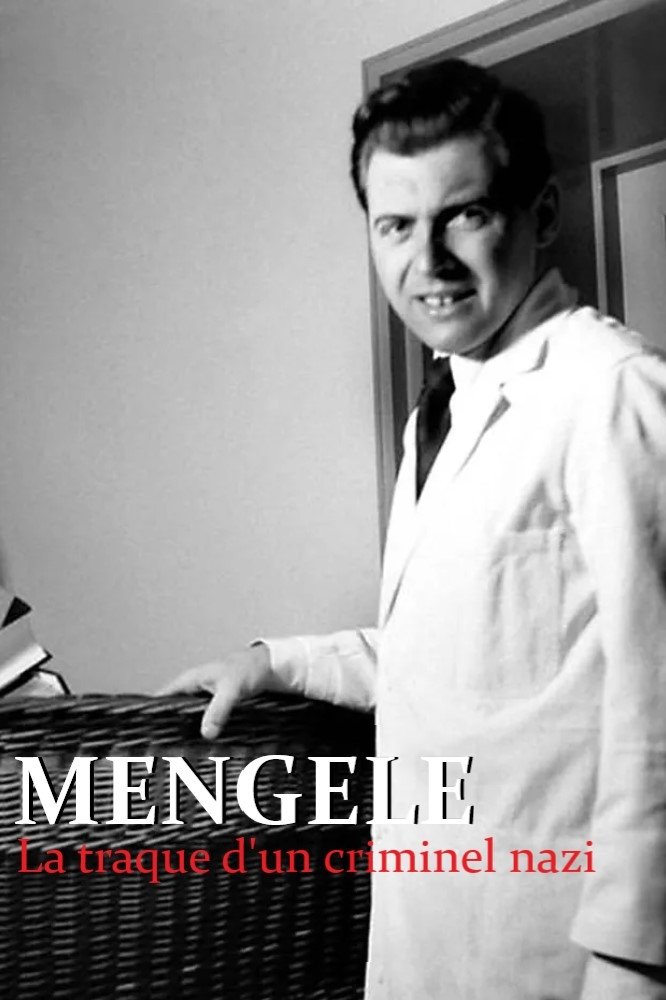
He was one of the most notorious Nazi war criminals, infamous for his assassination attempts on twins. But at the end of World War II, he simply disappeared...
Social & External
A true and captivating story about the biggest legal scandal in Swedish history, the story about the reporter who questioned an entire legal system. Hannes Råstam was dedicated to proving the innocence of Thomas Quick and unmask the legal chaos which sentenced Quick to a life in psychiatric prison.
In interviews, various actors and directors discuss their careers and their involvement in the making of what has come to be known as "cult" films. Included are such well-known genre figures as Russ Meyer, Curtis Harrington, Cameron Mitchell and James Karen.
Yuri is a high school student in the present day. She isn't happy with her life at home or school. One day, she has an argument with her mother and runs away from home. Somehow, when Yuri later opens her eyes, she realizes that she is in the year 1945. She happens to meet Akira. He is a pilot for a kamikaze unit in the military.
A dialogue-free documentary on former magazine model Pandora Peaks, with narration by Peaks and Meyer.
A remarkable film that takes a special look at the first war to be truly reported and recorded by one of the more unsung heroes of World War II: the combat photographer. Through the unflinching eye of their camera's lenses, these courageous soldiers continually risked their lives in their brave attempts to capture history.
In 1935, German scientists dug for bones; in 1943, they murdered to get them. How the German scientific community supported Nazism, distorted history to legitimize a hideous system and was an accomplice to its unspeakable crimes. The story of the Ahnenerbe, a sinister organization created to rewrite the obscure origins of a nation.
The story of Operation Market Garden—a failed attempt by the allies in the latter stages of WWII to end the war quickly by securing three bridges in Holland allowing access over the Rhine into Germany. A combination of poor allied intelligence and the presence of two crack German panzer divisions meant that the final part of this operation (the bridge in Arnhem over the Rhine) was doomed to failure.
Director Guy Hamilton and several of the stars of Agatha Christie's "Evil Under The Sun" walk you through the making of the film.
Agatha Christie's classic whodunit speeds into the twenty-first century. World-famous sleuth Hercule Poirot has just finished a case in Istanbul and is returning home to London onboard the luxurious Orient Express. But, the train comes to a sudden halt when a rock slide blocks the tracks ahead. And all the thrills of riding the famous train come to a halt when a man discovered dead in his compartment, stabbed nine times. The train is stranded. No one has gotten on or gotten off. That can only mean one thing: the killer is onboard, and it is up to Hercule Poirot to find him.
Elem Klimov's tribute to his late wife, director Larisa Shepitko, killed in a car accident a year earlier. Features excerpts from all of her films, and archival audio of her discussing life and art.
It's vacation time for Carter as he finds himself alongside Lee in Hong Kong wishing for more excitement. While Carter wants to party and meet the ladies, Lee is out to track down a Triad gang lord who may be responsible for killing two men at the American Embassy. Things get complicated as the pair stumble onto a counterfeiting plot. The boys are soon up to their necks in fist fights and life-threatening situations. A trip back to the U.S. may provide the answers about the bombing, the counterfeiting, and the true allegiance of sexy customs agent Isabella.
Edward Said, Professor of English & Comparative Literature at Columbia University, was a prominent literary critic of the late 20th century and a leading spokesperson for the Palestinian cause in the US. Born to a Palestinian family in Al-Quds (Jerusalem) in 1935, he and his family were dispossessed in 1948 and settled in Cairo. Educated in the US, he lived in New York for many years. Said was a member of the Palestine National Council. After resigning from the PNC in 1991, Said wrote critically about the post-Oslo peace process, the political failures of Yasser Arafat and the PLO. Said was diagnosed with leukemia in 1991 and struggled with the disease while continuing to write and teach. He stopped giving interviews but made an exception less than a year before his death in 2003, speaking about his illness, work, Palestine, politics, life, and education. The last interview is the final testament of this passionately committed intellectual.
About the events of the final stage of the Second World War — the defeat by Soviet and Mongolian troops of the selected Kwantung army. Bacteriological weapons were created in the laboratory of Japanese General Ishii Shiro. Experiments were conducted on prisoners of war and political prisoners. Epidemiologist Dmitry Sokolov was assigned to solve the mystery of this laboratory. At the cost of his own life, he completed the task. The march of Soviet and Mongolian formations through the Gobi sands and the Khingan spurs was not only a brilliant military operation, but also a warning of the use of bacteriological weapons by Japan.
Not only did Mary Tyler Moore “turn the world on with her smile,” as her show’s theme song declared, she also influenced a generation of women to become more independent and to pursue successful and fulfilling careers. Moore’s own 50-plus-year career has spanned award-winning films and Broadway shows, as well as two beloved television series that broke ground and continue to entertain viewers. This one-hour special includes highlights from a recent interview with Mary Tyler Moore, tributes from her co-stars and clips from iconic moments throughout her career. The program looks at her breakthrough role on The Dick Van Dyke Show, her iconic turn as TV's first independent career woman on The Mary Tyler Moore Show and her Academy Award-nominated work on Ordinary People.
Gray Matters explores the long, fascinating life and complicated career of architect and designer Eileen Gray, whose uncompromising vision defined and defied the practice of modernism in decoration, design and architecture. Making a reputation with her traditional lacquer work in the first decade of the 20th century, she became a critically acclaimed and sought after designer and decorator in the next before reinventing herself as an architect, a field in which she laboured largely in obscurity. Apart from the accolades that greeted her first building –persistently and perversely credited to her mentor–her pioneering work was done quietly, privately and to her own specifications. But she lived long enough (98) to be re-discovered and acclaimed. Today, with her work commanding extraordinary prices and attention, her legacy, like its creator, remains elusive, contested and compelling.
The Nazis, exasperated at the number of escapes from their prison camps by a relatively small number of Allied prisoners, relocate them to a high-security 'escape-proof' camp to sit out the remainder of the war. Undaunted, the prisoners plan one of the most ambitious escape attempts of World War II. Based on a true story.
A true-story account of a German businessman who saved more than 200,000 Chinese during the Nanjing massacre in 1937-38.
Stan Lee interviews Todd McFarlane
Director Claude Lanzmann spent 11 years on this sprawling documentary about the Holocaust, conducting his own interviews and refusing to use a single frame of archival footage. Dividing Holocaust witnesses into three categories – survivors, bystanders, and perpetrators – Lanzmann presents testimonies from survivors of the Chelmno concentration camp, an Auschwitz escapee, and witnesses of the Warsaw Ghetto Uprising, as well as a chilling report of gas chambers from an SS officer at Treblinka.

The US Government tries to track down embedded Nazi agents in the States.

Meet the real-life airmen who inspired Masters of the Air as they share the harrowing and transformative events of the 100th Bomb Group.
The extraordinary story of how Hollywood changed World War II – and how World War II changed Hollywood, through the interwoven experiences of five legendary filmmakers who went to war to serve their country and bring the truth to the American people: John Ford, William Wyler, John Huston, Frank Capra, and George Stevens. Based on Mark Harris’ best-selling book, “Five Came Back: A Story of Hollywood and the Second World War.”

Told through performances, TV interviews, home movies, family photographs, private letters and unpublished memoirs, the film reveals the essence of an extraordinary woman who rose from humble beginnings in New York City to become a glamorous international superstar and one of the greatest artists of all time.
A World War II veteran hunts down the Nazi collaborators who killed his wife.
Following the suicide of an elderly Jewish man, investigative journalist Peter Miller sets out to hunt down an SS Captain and former concentration camp commander. In doing so he discovers that, despite allegations of war crimes, the former commander has become a man of importance in industry in post-war Germany, protected from prosecution by a powerful organisation of former SS members called Odessa.
Documentary filmmaker Amy Berg investigates the life of 30-year pedophile Father Oliver O'Grady and exposes the corruption inside the Catholic Church that allowed him to abuse countless children. Victims' stories and a disturbing interview with O'Grady offer a view into the troubled mind of the spiritual leader who moved from parish to parish gaining trust ... all the while betraying so many.
A documentary highlighting the Soviet Union's legendary and enigmatic hockey training culture and world-dominating team through the eyes of the team's Captain Slava Fetisov, following his shift from hockey star and celebrated national hero to political enemy.
Celebrate the legacy of Stan Lee as the co-creator of such legendary characters as Fantastic Four, Iron Man, the X-Men, The Avengers, and hundreds more.
The most comprehensive retrospective of the '80s action film genre ever made.
Prelude to War was the first film of Frank Capra's Why We Fight propaganda film series, commissioned by the Pentagon and George C. Marshall. It was made to convince American troops of the necessity of combating the Axis Powers during World War II. This film examines the differences between democratic and fascist states.
World War II is raging, and an American general has been captured and is being held hostage in the Schloss Adler, a Bavarian castle that's nearly impossible to breach. It's up to a group of skilled Allied soldiers to liberate the general before it's too late.
Justice Ruth Bader Ginsburg now 84, and still inspired by the lawyers who defended free speech during the Red Scare, Ginsburg refuses to relinquish her passionate duty, steadily fighting for equal rights for all citizens under the law. Through intimate interviews and unprecedented access to Ginsburg’s life outside the court, RBG tells the electric story of Ginsburg’s consuming love affairs with both the Constitution and her beloved husband Marty—and of a life’s work that led her to become an icon of justice in the highest court in the land.
Unprecedented access to Muhammad Ali's personal archive of "audio journals" as well as interviews and testimonials from his inner circle of family and friends are used to tell the legend's life story.
In postwar Vienna, Austria, Holly Martins, a writer of pulp Westerns, arrives penniless as a guest of his childhood chum Harry Lime, only to learn he has died. Martins develops a conspiracy theory after learning of a "third man" present at the time of Harry's death, running into interference from British officer Major Calloway, and falling head-over-heels for Harry's grief-stricken lover, Anna.
George Taylor returns from WWII with amnesia. Back home in Los Angeles, while trying to track down his old identity, he stumbles onto a three year old murder case and a hunt for a missing $2 million.
A documentary on the life and career of one of the most influential film directors of all time, Steven Spielberg.
An American ballistics expert in Turkey finds himself targeted by Nazi agents. Safe passage home by ship is arranged for him, but he soon discovers that his pursuers are also on board.
In 1964, Henri-Georges Clouzot's production of L'Enfer came to a halt. Despite huge expectations, major studio backing and an unlimited budget, after three weeks the production collapsed. This documentary presents Inferno's incredible expressionistic original rushes, screen tests, and on-location footage, whilst also reconstructing Clouzot's original vision, and shedding light on the ill-fated endeavor through interviews, dramatizations of unfilmed scenes, and Clouzot's own notes.